Introduction: A $2.9 Million Business and the Question of Ownership
Divorce cases are rarely just about two people. When a business worth nearly three million dollars is at stake, the financial consequences of a court’s characterization decision can be staggering, and long-lasting. Per the published opinion, B. v. B., decided by the San Antonio Court of Appeals in June 2026, is a case that every Dallas-area resident with business interests, or a spouse who has them, needs to understand before walking into a courtroom.
At the heart of this case was F.A., LLC, a company manufacturing and selling all-natural flea, tick, and mosquito repellent for pets. By the time the parties reached trial, a court-appointed receiver had determined the business had a fair market value of $2,925,000. The wife, L.G.B., argued she had a community interest in the company after working there throughout the marriage. The husband, S.D.B., maintained it was his separate property, awarded to him in a prior divorce, that had merely changed its legal form over time.
The appellate court sided with the husband. The decision touches on foundational principles of Texas property law: the community property presumption, the tracing requirement, the doctrine of mutations, and the procedural consequences of inadequate appellate briefing. For anyone navigating a high-asset divorce in the Dallas-Fort Worth region, the lessons from this case are immediate and practical. If you are considering divorce and have questions about how business ownership might affect your case, speaking with a Dallas divorce attorney before filing is one of the most important steps you can take.
Case Background: From Sole Proprietorship to LLC and Into Divorce Court
S.D.B. filed for divorce in Bexar County in June 2022, seeking to dissolve his marriage to L.G.B. She answered and filed a counter-petition. What began as a marital dissolution quickly turned into a complex business dispute.
The business at issue, F.A., had a complicated history. S.D.B. had operated it as a sole proprietorship beginning in 2012, and his divorce decree from a prior marriage in California awarded him the business as his “sole and separate property” on November 27, 2012. He and L.G.B. subsequently began living together as husband and wife the very next day. The couple worked together in the business for more than a decade.
On June 15, 2022, just days before S.D.B. filed for divorce, F.A. ceased operating as a sole proprietorship and converted to a Texas limited liability company, Flea Away, LLC. The timing of that conversion would become a central issue in the litigation. A receiver was appointed in February 2023 to manage the business while the case was pending.
L.G.B. testified that she had worked in the business throughout the marriage and believed she had acquired an ownership interest in it. She claimed documents showed her as a co-owner, but no such documents were admitted into evidence at trial. She also argued that the LLC was fundamentally different from the original sole proprietorship, pointing to FDA approval of its product and the addition of new items, and therefore could not be treated as the same entity for characterization purposes.
The trial court disagreed. It confirmed the LLC as S.D.B.’s sole and separate property and ordered him to pay L.G.B. an equalization payment of $438,750 (fifteen percent of the business’s value), plus $100,000 on a waste/fraud claim and $110,272 in loan reimbursement. L.G.B. also received three vehicles and a California home. Still, she appealed, arguing the business characterization was wrong, that the trial court failed to issue sufficient findings of fact, and that the court should not have permitted S.D.B.’s amended pleading. All three arguments failed on appeal.
This type of high-stakes property dispute is precisely where experienced Dallas family law attorney representation can make the difference between an equitable outcome and a devastating financial loss. Residents across the region, from Irving to Richardson to Garland and Mesquite, face similar questions when marriages involving business interests end.
Legal Analysis: Four Pillars That Decided This Case
The Community Property Presumption and the Clear and Convincing Standard
Texas law presumes that all property possessed by either spouse at the time of divorce is community property. TEX. FAM. CODE § 3.003(a). To rebut this presumption, a spouse claiming separate property must trace and clearly identify that property by clear and convincing evidence, a demanding standard requiring the factfinder to have a firm belief or conviction in the truth of the claim. P. v. F., 332 S.W.3d 361, 363 (Tex. 2011).
L.G.B. argued that S.D.B.’s testimony alone was insufficient to meet this burden. The appellate court rejected that framing. The court found that S.D.B.’s testimony was corroborated by substantial documentary evidence: a certified copy of the 2012 California divorce decree explicitly awarding him F.A. as separate property; articles of organization filed with the Texas Secretary of State when the LLC was formed; a membership assignment transferring all rights to S.D.B. individually; and bank statements spanning 2020–2023 showing continuous business activity under the same trade name, with the same primary distributor (C.I.), before and after the LLC conversion.
The court cited In re Marriage of S. (Tex. App.—Dallas 2008) for the general principle that documentary corroboration is ordinarily required, and found that S.D.B. had met that standard. This is a crucial point for anyone in the Dallas region dealing with a business ownership dispute: documentation is everything. A Dallas divorce lawyer consultation early in the process can help you understand which records to preserve and how to organize them before litigation begins.
The Doctrine of Mutations: When a Business Changes Form but Not Character
One of the most significant doctrinal holdings in Bowles involves the treatment of F.A.’s conversion from a sole proprietorship to an LLC. Under Texas law, separate property does not lose its character simply because it changes form. “Property established to be separate remains separate property regardless of the fact that it may undergo any number of mutations and changes in form.” In re Marriage of G. (Tex. App.—Waco 2010).
L.G.B. relied on A. v. A., 704 S.W.2d 600 (Tex. App.—Fort Worth 1986), which held that a wife who incorporated her separate-property beauty salon could not trace her separate property contribution to the new corporation where community funds were used for capitalization and the wife rented equipment back to the corporation rather than contributing it. The appellate court found A. factually distinguishable on every key point: unlike A., S.D.B. did not use community funds to capitalize the LLC, did not take the business’s physical assets into his personal possession, and did not rent property back to the LLC. The vehicles, trailer, and motorcycle associated with the business remained with the LLC throughout. Business continuity, same product, same distributor, same core operations, was unbroken.
This analysis will matter to many Dallas-area divorcing spouses, particularly those involved with high net worth divorce situations where business entities have evolved over time. The lesson: when a business changes its legal form during a marriage, the key question is whether the underlying separate property can be traced through the transition, and whether community funds financed any part of the new entity’s creation.
Appellate Briefing Requirements: Waiver as a Case-Ending Trap
Perhaps the most cautionary procedural holding in B. involves L.G.B.’s failure to properly brief her second issue on appeal. Under TEX. FAM. CODE § 6.711(a), when disputed valuation evidence has been presented at trial, a spouse may request detailed written findings on the value of specific assets, liabilities, and claims. L.G.B. argued the trial court failed to provide these findings, preventing her from demonstrating the harm caused by the alleged mischaracterization of the business.
The appellate court declined to reach the merits, because L.G.B.’s brief did not identify which specific assets were at issue or cite to portions of the reporter’s record where disputed valuation evidence had been presented. Under TEX. R. APP. P. 38.1(i), an appellant’s failure to provide substantive analysis and appropriate record citations waives the complaint entirely. As the court put it, it is not the appellate court’s duty “to search the record without guidance from an appellant to determine whether her complaints are valid.”
This outcome underscores a painful reality in Texas family law appeals: procedural missteps at the appellate stage can forfeit substantive rights, no matter how legitimate the underlying grievance. The Law Office of Michael P. Granata, with 25+ years of Dallas family law experience, approaches both trial and appellate strategy with the precision these requirements demand, giving clients honest assessments of what courts can and cannot be expected to accomplish on review.
The Amended Pleading Issue and Cross-Point Dismissal
L.G.B. also challenged the trial court’s decision to allow S.D.B. to proceed on his first amended petition, which, unlike his original petition, included a formal request to confirm separate property. Under TEX. R. CIV. P. 63, a party may amend pleadings without leave of court if the amendment is filed more than seven days before trial, unless the opposing party demonstrates surprise or prejudice.
S.D.B. filed his first amended petition eight days before trial, within the permissible window. When the trial court rejected the second amended petition (filed the day before trial) and allowed only the first, L.G.B.’s counsel responded with “Yes, Judge” and presented no evidence of surprise or prejudice. That response effectively waived the objection. The court noted that a confirmation of separate property is not a new cause of action; it is inherent in any property division proceeding.
S.D.B.’s cross-point, arguing no valid marriage ever existed, was dismissed because he failed to file a separate notice of appeal. Under TEX. R. APP. P. 25.1(c), a party who did not appeal cannot receive more favorable relief than the trial court granted. This is a straightforward but frequently overlooked procedural requirement that can trap parties who only realize too late that they want to challenge an aspect of the decree in their favor.
For anyone in the Grand Prairie or Richardson areas navigating a complex divorce, these procedural details are not footnote, they are case-determinative. The blog at dallasdivorcelawyer.com regularly analyzes cases like this one so that readers understand what is actually at stake before they enter the courtroom.
Key Takeaways for Dallas Divorcing Couples
What does B. v. B. mean for you?
If you or your spouse own a business that predates the marriage, or that was awarded in a prior divorce, that business may remain separate property even if it has changed its legal structure during the marriage. But the burden to prove it is high: clear and convincing evidence, supported by documentation, not just testimony. Community funds used to capitalize or restructure a business can blur the line significantly. And on appeal, procedural compliance is not optional, inadequate briefing will cost you rights you may have legitimately earned at trial. A Dallas child custody lawyer or Dallas child support lawyer can address related family law needs while your property issues are resolved.
Strategic Insights: What This Case Teaches About Preparation
Cases like B. illustrate the importance of building a documentary record early, before conversion, before filing, and before the first court date. Alternative approaches for the non-owner spouse might have included retaining a forensic accountant to trace community labor contributions and quantify reimbursement claims, or developing detailed evidence of how community funds were commingled with business operations over more than a decade. On the appellate side, a more precisely structured brief with specific record citations could have preserved issues for full review. Experienced legal guidance from a Dallas family law attorney provides the strategic clarity these situations demand, before, during, and after trial.
Ready to Talk? Contact the Law Office of Michael P. Granata
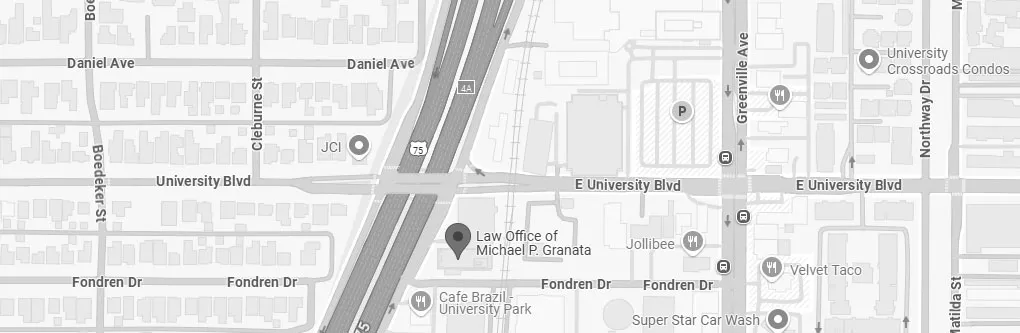
If you are facing a divorce involving business interests, significant assets, or complex property disputes, the stakes are too high to navigate alone. The Law Office of Michael P. Granata has served Dallas families for more than 25 years with honest assessments, strategic thinking, and compassionate representation. We serve clients throughout Dallas and the surrounding communities, including Irving, Richardson, Garland, Mesquite, Grand Prairie, DeSoto, Duncanville, Lancaster, Seagoville, Cockrell Hill, Lakewood, and Highland Park. We also handle matters involving spousal support and high net worth divorce. Schedule your divorce attorney near me consultation today, because knowing your rights before you act is always the strongest position.