Discovering that your separate property has been mixed into a joint bank account during your marriage can feel like watching your financial history disappear into a black hole. Maybe you inherited money from a parent. Maybe you sold a home you owned before the marriage and deposited the proceeds into a shared checking account. Maybe a settlement, a gift, or savings you built up long before you said “I do” got folded into the family’s everyday finances over the years.
If you are now facing divorce, you may be wondering whether that money is gone for good — absorbed into the marital estate and subject to division. The honest answer is that it depends entirely on whether it can be traced, and tracing commingled funds is one of the most technical, misunderstood, and frequently mishandled issues in Texas family law.
This guide explains how separate property tracing works in a commingled bank account, why so few attorneys do it well, and how a forensic-accounting-minded Dallas divorce attorney can help you protect what is rightfully yours. We will not sugarcoat the difficulty of this process — but we will give you a clear, honest picture of what it takes to succeed.
Why Commingled Bank Accounts Complicate Texas Divorce Cases
Texas is a community property state. Under Texas Family Code § 3.003(a), any property either spouse possesses during the marriage — including the money sitting in a joint checking or savings account — is presumed to belong to the community estate. That presumption applies even if you know, with complete personal certainty, that a portion of those funds came from an inheritance, a premarital savings account, or a personal injury settlement.
The problem is not whether separate funds went into the account. The problem is proving it, dollar for dollar, after years of deposits, withdrawals, transfers, bill payments, and ATM trips have blurred the line between “yours” and “ours.” This is exactly the kind of dispute where forensic accounting and skilled legal advocacy intersect, and it is also why this topic is so highly searched and so rarely explained clearly. Most general-practice family law content barely scratches the surface.
The Texas Community Property Presumption: What You’re Up Against
Before discussing how tracing works, it helps to understand exactly what you are required to overcome.
The Clear and Convincing Evidence Standard
To rebut the community property presumption, the spouse claiming separate property must prove that claim by clear and convincing evidence — a higher bar than the “preponderance of the evidence” standard used in most civil disputes. Clear and convincing evidence means the proof must produce a firm belief or conviction that the claim is true. Vague recollections, verbal assurances, or “I just know it was my money” testimony, no matter how sincere, will not satisfy this standard on its own.
If the evidence does not rise to that level, Texas courts default to the statutory presumption: the disputed funds are treated as community property and become part of the “just and right” division between spouses. This is precisely why early, methodical documentation matters so much, and why so many people lose separate property claims they should have won — not because the money wasn’t truly separate, but because nobody built the paper trail to prove it.
What Does “Commingling” Actually Mean?
Commingling occurs when separate property funds are mixed with community property funds in the same account, to the point that the funds are no longer easily distinguishable. Common examples include:
- Depositing inheritance proceeds into a joint checking account used for household bills.
- Rolling proceeds from the sale of a premarital home into a marital savings account.
- Depositing a personal injury settlement (the portion attributable to pain and suffering, which Texas treats as separate) into a shared account.
- Using a single account for both a separate-property business’s income and family living expenses.
- Years of paychecks (community property) and gifts from parents (separate property) flowing through the same account without any segregation.
None of these situations automatically destroy a separate property claim. But they do mean someone has to reconstruct, transaction by transaction, what happened to the money — and that reconstruction has to hold up under cross-examination. This is exactly the kind of analysis a seasoned family law attorney serving Dallas should be comfortable walking you through in plain language, not legal jargon.
How Forensic Tracing Works in a Commingled Bank Account
Texas courts and the forensic accountants who testify before them generally rely on a handful of recognized tracing methodologies. Which one applies depends on the facts, the available records, and how the funds moved.
The Community-Out-First Rule (Lowest Intermediate Balance Rule)
This is the most commonly applied method in Texas. It presumes that when a commingled account contains both community and separate funds, withdrawals are deemed to come from community funds first, for as long as community funds remain in the account. Under this rule — also called the lowest intermediate balance rule — your separate property is only considered “spent” if the account balance ever drops below the amount of separate funds you can document. If the balance never dipped below that threshold, your separate funds are presumed to have survived intact, even though hundreds of transactions occurred in between.
This rule has deep roots in Texas case law, tracing back to tracing-sheet methods developed by Texas family lawyers decades ago and reinforced in subsequent appellate decisions. It rewards meticulous analysis of bank statements and detailed running balances — exactly the kind of work a forensic accountant is trained to do.
The Pro Rata Tracing Method
In some circumstances, courts apply a pro rata approach: once separate funds are deposited into a marital account, subsequent withdrawals, interest, or appreciation are allocated proportionally between the separate and community shares based on their relative percentages at the time. This method is more common with investment or brokerage accounts than ordinary checking accounts. Still, it can come into play when an account has been commingled for so long that a strict dollar-for-dollar history is genuinely impossible to reconstruct.
Direct Tracing, FIFO, and LIFO Methods
Direct tracing follows a specific, identifiable deposit from its separate-property source straight through to its current form — for example, an inheritance check deposited and never touched again. First-in-first-out (FIFO) and last-in-first-out (LIFO) accounting methods are sometimes used by forensic experts to determine which dollars were spent and which remained, depending on the order in which deposits and withdrawals occurred. Texas courts most frequently favor the community-out-first approach, but a skilled forensic accountant will know when an alternative method better fits the facts — and how to defend that choice if challenged.
Why You Need Both a Forensic Accountant and a Dallas Divorce Attorney
Tracing separate property in a commingled account is not a do-it-yourself project, and it is not something every attorney is equipped to handle well. It requires pulling years — sometimes decades — of bank statements, reconstructing running balances, identifying the source of every significant deposit, and presenting that analysis in a way a judge can follow and a forensic accountant can defend under cross-examination.
This is precisely the kind of complex asset work we focus on. Our office routinely partners with forensic accountants on commingled account disputes, hidden asset investigations, and complex property division cases, including matters involving high-value estates.
If your case involves significant wealth, multiple accounts, or business interests layered on top of the tracing issue, our Dallas high net worth divorce lawyer team has the experience to coordinate the legal and financial analysis from day one, rather than scrambling to rebuild records after the fact.
Common Mistakes That Destroy Separate Property Claims
We have reviewed enough commingled-account disputes to know exactly where these claims tend to fall apart. Watch for these errors:
- Waiting too long to start gathering records. Banks routinely purge statements after seven years, and some online portals only retain two to three years of history by default.
- Relying on memory or verbal explanations instead of documents. Courts require clear and convincing evidence — testimony alone rarely meets that bar.
- Letting an account balance drop below the separate property amount without realizing the legal consequences under the lowest intermediate balance rule.
- Mixing multiple separate property sources (inheritance, premarital savings, a settlement) into one account without ever distinguishing them.
- Hiring a generalist instead of working with a Dallas divorce attorney experienced in complex asset tracing and forensic accounting collaboration.
- Failing to address commingling issues before separation, when records were still complete and accessible.
What Documents You Need to Trace Separate Property
If you suspect a commingled account is part of your divorce, start gathering the following as early as possible:
- Complete bank statements covering the account from before the marriage (or before the deposit in question) through the present.
- Documentation establishing the separate property source: inheritance paperwork, a closing statement from the sale of a premarital home, a settlement agreement, or gift documentation.
- Records of any transfers between accounts, including dates and amounts.
- Tax returns reflecting interest, dividends, or capital gains tied to the separate funds.
- Any prior financial statements, loan applications, or appraisals that reference the separate asset before it was deposited.
The more complete this file is when you first meet with an attorney, the stronger your tracing argument will be — and the less expensive the forensic accounting work tends to become.
How a Dallas Divorce Attorney Builds Your Tracing Case
When we take on a commingled-account tracing matter, the process generally follows several stages: identifying every account that may contain separate funds, subpoenaing historical records the client no longer has, engaging a forensic accountant to reconstruct running balances under the appropriate tracing method, preparing demonstrative exhibits a judge can actually follow, and preparing the client and the expert for testimony that will withstand cross-examination.
We will tell you upfront if your tracing claim is weak. We would rather give you an honest, realistic assessment of what the evidence can support than build false confidence around a claim that will not hold up in court. That same honest approach carries through every part of a case, including how we handle child custody and child support disputes that often arise alongside property division.
Contested vs. Uncontested Divorce: Does Tracing Still Matter?
Commingled accounts also frequently overlap with child support calculations, since income and separate funds can run through the same account. A Dallas child support attorney on your team should know how to separate true income available for support from one-time separate property deposits so the support calculation is not artificially inflated.
Whether tracing matters depends heavily on whether your divorce is contested or amicable. In an uncontested divorce attorney in Dallas scenario, where both spouses largely agree on how to divide assets, a less formal tracing analysis may suffice if both parties accept the numbers. But the moment there is any disagreement about whether an account contains separate funds — which is common even in otherwise cooperative divorces — you are dealing with a contested divorce in Dallas in everything but name, at least on that issue.
In a fully contested divorce in Dallas, where the other spouse disputes your separate property claim outright, formal forensic tracing supported by expert testimony becomes essential. Courts do not split the difference on tracing claims; either the evidence meets the clear and convincing standard, or the funds are treated as community property in full.
Choosing the Best Divorce Lawyer in Dallas for Complex Property Cases
Not every family law practice handles forensic tracing on a regular basis, and that matters more than most people realize when significant separate property is on the line. When you are searching for the best divorce lawyer in Dallas to handle a commingled account dispute, look past the marketing and ask specific questions about experience.
Dallas Family Law Attorney Qualifications to Look For
- Direct experience presenting tracing evidence in Dallas County family courts, not just general divorce experience.
- Established working relationships with qualified forensic accountants who can testify credibly as expert witnesses.
- A track record handling cases involving inheritance, business income, premarital assets, or settlement proceeds.
- Transparent, upfront communication about fees, the realistic strength of your claim, and the likely cost of forensic work.
- A willingness to litigate aggressively if a fair settlement is not on the table, paired with the judgment to settle when that genuinely serves your interests.
Many people search for a “divorce attorney near me” expecting convenience to be the deciding factor. Location matters less than substantive experience with the specific financial issues in your case — particularly when an opposing spouse has retained sophisticated counsel of their own.
What Dallas Divorce Attorney Reviews Tell You — and What They Don’t
Dallas divorce attorney reviews can be a useful starting point, but they rarely tell you anything about how a firm handles forensic accounting issues specifically, since most reviews focus on communication and overall experience rather than technical case outcomes. When you read reviews, look for mentions of complex property division, business valuation, or contested financial disputes — not just general satisfaction. Then verify that experience directly in your consultation.
Father’s Rights and Mother’s Rights When Property and Custody Overlap
Commingled property disputes rarely exist in isolation. They frequently surface alongside custody and support negotiations, and both fathers and mothers sometimes worry that financial disputes will be used unfairly against them in those discussions.
Texas law does not favor either parent based on gender in custody determinations, and the same even-handed standard should apply to how your attorney approaches both father’s rights divorce Dallas concerns and mothers’ rights divorce Dallas concerns. Property division and custody are legally separate issues, and a well-prepared child custody lawyer in Dallas will make sure financial disputes do not unfairly bleed into parenting decisions, or vice versa.
Is Forensic Tracing Affordable? What an Affordable Divorce Lawyer in Dallas Can and Can’t Do
Forensic accounting work has real costs, and we will not pretend otherwise. Reconstructing years of bank statements takes time, and expert witness fees add up. An affordable divorce lawyer in Dallas should be honest with you about when forensic tracing is worth the investment and when it is not — for example, when the disputed amount is small relative to the cost of proving it, a simplified approach may make more financial sense than full forensic litigation.
We believe in transparent pricing and honest case assessment from the very first conversation. We would rather tell you that a $15,000 tracing fight over a $20,000 disputed deposit doesn’t make financial sense than take the case anyway and let you find that out later.
Tracing issues also frequently intersect with spousal support calculations and other complex financial matters covered in our broader blog, where we regularly break down Texas property and support law in plain language.
Frequently Asked Questions About Tracing Separate Property
Can separate property really be lost once it’s mixed into a joint account?
Yes, it can be — if the funds become so thoroughly commingled that they can no longer be reliably distinguished from community property, Texas courts may treat the entire account as community property. This is exactly why early, thorough documentation and prompt legal advice are so important.
What is the community-out-first rule in Texas divorce cases?
The community-out-first rule, also called the lowest intermediate balance rule, presumes that withdrawals from a commingled account come from community funds before any separate funds are considered spent. Your separate property is only treated as depleted if the account balance drops below your documented separate contribution at some point in its history.
Do I need a forensic accountant for my Dallas divorce?
If your case involves a commingled bank account, business income, retirement accounts, or any asset where the separate versus community character is disputed, a forensic accountant is often essential to meet the clear and convincing evidence standard Texas law requires.
How far back do bank records need to go to trace separate property?
Ideally, records should go back to before the separate funds were first deposited into the account in question. In long marriages, this can mean a decade or more of statements, which is why requesting records from your bank as early as possible in the process matters.
Is an uncontested divorce attorney in Dallas still necessary if we agree on everything?
Even in an amicable case, an uncontested divorce attorney in Dallas can confirm that your settlement agreement accurately characterizes separate versus community property, so a tracing dispute doesn’t resurface later if circumstances change.
What makes a contested divorce in Dallas different when property tracing is involved?
In a contested divorce in Dallas, the opposing spouse disputes your separate property claim, which means you must present formal evidence — often including expert forensic testimony — rather than relying on an agreed characterization of the funds.
How do I schedule a Dallas divorce lawyer consultation?
You can request a Dallas divorce lawyer consultation by calling our office directly or submitting a request through our website. We recommend bringing whatever bank statements, deeds, or settlement documents you already have to your first meeting.
Serving Dallas and Surrounding Communities
Our Dallas divorce law firm proudly serves clients throughout Dallas County. We understand that divorce proceedings often involve local court systems, and our extensive experience in Dallas-area family courts gives our clients a distinct advantage.
Primary Service Areas:
- Dallas
- Garland
- Richardson
- Mesquite
- Irving
- DeSoto
- Grand Prairie
- Seagoville
- Duncanville
Whether you need a Dallas area divorce lawyer or a family attorney serving Garland, Richardson, Mesquite, or Irving, our team brings the same forensic rigor to commingled property disputes across every community we serve. Explore our dedicated pages for Irving and Garland divorce representation, or contact our Dallas office directly to discuss your case.
Key Services: Divorce, Child Custody, Child Support, Asset Division, Mediation.
Why call us: 25+ years of experience, personalized attention from a small, dedicated team, transparent pricing, and clear, honest explanations of your legal options. We give you straightforward case assessments — not placating reassurances — because informed decisions require facts, not false hope.
We bring a compassionate approach to every client relationship, but we are strategic, committed, and tough when a courtroom fight is necessary to protect your interests. You deserve honest communication over empty promises, and a realistic picture of your case rather than inflated expectations no attorney could actually deliver.
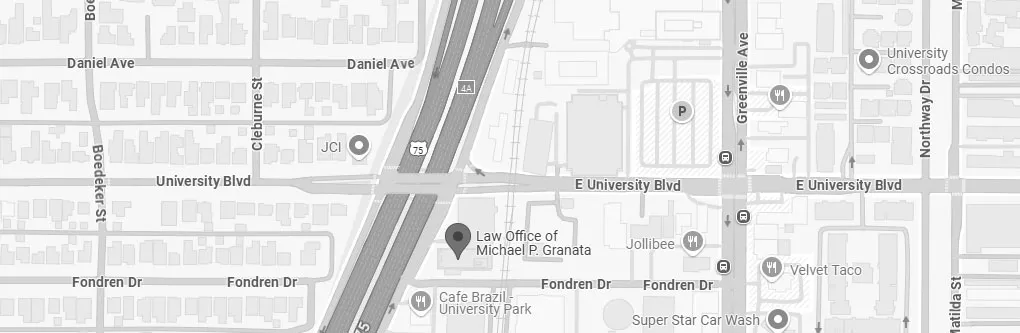
Office: 6440 N. Central Expressway, Suite 450, Dallas, Texas 75206 | Phone: (214) 977-9050
Schedule Your Dallas Divorce Lawyer Consultation Today
If you believe separate property was commingled into a joint account during your marriage, the time to start building your case is now — not after records disappear or the conversation turns adversarial. A Dallas divorce attorney who understands forensic tracing can help you understand realistically what is recoverable and what it will take to prove it.
Contact the Law Office of Michael P. Granata today at (214) 977-9050 to schedule your confidential Dallas divorce lawyer consultation. We will give you an honest assessment of your separate property claim, explain your options clearly, and help you decide on a path forward based on facts — not false hope.