If you are reading this, chances are you are standing at one of the most difficult crossroads of your life. Divorce is rarely something anyone plans for. It can feel overwhelming, isolating, and financially frightening — all at once. Whether you have been married for five years or thirty-five, the decision to end a marriage carries emotional weight that no legal filing can fully capture.
Our goal with this article is simple: to give you clear, honest information so you can make an informed choice about the road ahead. Specifically, we want to help you understand the difference between an uncontested and a contested divorce in Texas, and which path may be right for your family. If you are searching for a Dallas divorce attorney who will tell you the truth rather than tell you what you want to hear, you are in the right place.
At the Law Office of Michael P. Granata, we have spent more than 25 years guiding Dallas families through this process. We believe in plain language, realistic assessments, and a compassionate approach — one that is also strategic and tough when the courtroom calls for it.
Understanding the Two Main Divorce Paths in Texas
Every Texas divorce falls into one of two broad categories. Knowing which one applies to your situation is the first step in setting expectations — for timeline, for cost, and for emotional toll.
What Is an Uncontested Divorce?
An uncontested divorce is exactly what it sounds like: both spouses agree on every material issue in the case. That includes the division of community property and debts, any spousal support, and — if children are involved — conservatorship (custody), possession and access (visitation), and child support.
When spouses can truly agree on all of these issues, the case can move through the court system relatively quickly after Texas’s mandatory 60-day waiting period. An uncontested divorce is generally faster, less expensive, and significantly less stressful than a contested case.
However, an “agreement” reached without understanding your legal rights is not really an agreement — it is a concession. Even in amicable cases, an experienced uncontested divorce attorney in Dallas should review the terms before anything is signed. You should never sign a final decree without knowing exactly what you are giving up and what you are keeping.
What Is a Contested Divorce?
A contested divorce in Dallas occurs when spouses cannot agree on one or more significant issues. The disputes may involve property characterization, the valuation of a business, how retirement accounts are divided, who the children will primarily live with, or how much support one spouse will pay the other.
Contested cases require formal discovery, temporary orders hearings, mediation, and sometimes a trial. They take longer — often 9 to 18 months or more — and cost substantially more. But when the stakes are high or your spouse is not negotiating in good faith, a contested divorce may be the only way to protect what matters most.
How to Know Which Type of Divorce You Have
Most people do not choose between contested and uncontested; the facts of the marriage choose for them. Still, there are telltale signs that can help you understand where your case is likely to fall.
Signs You May Have an Uncontested Divorce
- You and your spouse have already had honest conversations about separating.
- You generally agree on how to divide major assets and debts.
- If you have children, you agree on a parenting schedule and support arrangement.
- Neither spouse owns a business, professional practice, or complex investment portfolio.
- There is no history of family violence, hidden assets, or substance abuse.
- Both spouses are willing to exchange financial information voluntarily.
Signs You May Have a Contested Divorce
- Your spouse has threatened to “take everything” or “make this ugly.”
- One spouse controls the finances and refuses to share information.
- There are allegations of adultery, cruelty, or financial waste.
- You own a business together, or one spouse suspects the other is hiding income.
- There is a significant disparity in earning power and spousal maintenance is in play.
- You disagree about where the children will live or attend school.
- A prenuptial or postnuptial agreement is being challenged.
The Honest Pros and Cons of Each Path
Every divorce attorney will tell you uncontested is “better.” We tell our clients the truth: it is better when it is appropriate. It is not better when it results in an unfair outcome because one spouse was pressured or underinformed.
Advantages of an Uncontested Divorce
- Lower legal fees, often a fraction of a contested case.
- Faster resolution — many cases finalize shortly after the 60-day waiting period.
- Privacy, since sensitive details never surface in a public hearing.
- Preserved co-parenting relationships, which matter enormously for children.
- Greater control over the outcome rather than leaving decisions to a judge.
Disadvantages of an Uncontested Divorce
- It requires genuine cooperation — rare in high-conflict marriages.
- Without proper legal review, one spouse may unknowingly waive important rights.
- Hidden assets or undervalued property can slip through without formal discovery.
- Agreements made under emotional duress are difficult to undo later.
Advantages of a Contested Divorce
- Formal discovery tools uncover hidden income, accounts, and assets.
- Temporary orders protect you and your children during the case.
- A judge can enforce fairness when a spouse refuses to negotiate reasonably.
- Business valuations, custody evaluations, and forensic accounting become available.
Disadvantages of a Contested Divorce
- Higher legal costs, sometimes significantly so.
- Longer timelines, typically 9 to 18 months.
- Greater emotional wear on both spouses and children.
- Less control — a judge who does not know your family will make final decisions.
How a Dallas Divorce Attorney Helps in Each Situation
People sometimes assume that an uncontested divorce does not require a lawyer. That is a mistake we see often — usually after the decree is signed and something has gone wrong. The role of a Dallas divorce attorney is not just to argue in court. It is to identify what you do not know you do not know.
In an Uncontested Case
A family law attorney serving Dallas will draft a decree that is legally enforceable, verify that your community property division complies with Texas law, ensure child support calculations follow the statutory guidelines, and confirm that possession schedules meet the standard expectations of Dallas County courts. A clean decree now prevents expensive modification or enforcement litigation later.
In a Contested Case
In a contested matter, your attorney becomes your strategist. We conduct formal discovery, retain valuation experts when needed, prepare you for deposition, negotiate at mediation, and — if no reasonable settlement can be reached — try the case. Whether the issue is child custody, child support, or the division of a complex marital estate, we build the record that protects your position.
Special Considerations for Dallas Parents
Child Custody and the Best Interest Standard
Texas courts decide conservatorship using the “best interest of the child” standard. Judges look at stability, the primary caregiver history, the child’s preference (for children 12 and older), and any history of family violence. An experienced child custody lawyer in Dallas will help you understand how these factors apply to your family, and whether joint managing conservatorship or sole managing conservatorship is realistic.
Fathers’ Rights and Mothers’ Rights in Dallas Divorce
Texas law does not favor mothers over fathers. The presumption in our state is that parents will be named joint managing conservators, with one parent designated to establish the child’s primary residence. We represent both mothers and fathers vigorously. Fathers’ rights divorce Dallas cases often come down to documentation — showing the court the active, involved role a father has played. Mothers’ rights divorce cases in Dallas often center on protecting primary caregiving continuity. Either way, the record you build matters.
Child Support in Texas
Texas uses a guideline formula based on the obligor’s net resources. A skilled Dallas child support attorney can verify income calculations, address self-employed or variable-income situations, and make sure health insurance and uninsured medical costs are properly allocated. If your spouse is underreporting income or hiding bonus compensation, this becomes a contested issue that requires formal discovery.
High Net Worth and Complex Divorce Cases
Not every divorce involves a simple division of a house, two cars, and a 401(k). When business interests, professional practices, executive compensation, stock options, partnership interests, or significant separate-property claims are involved, the case demands a different approach. Our high net worth divorce practice focuses on tracing separate property, valuing closely-held businesses, analyzing reimbursement claims, and addressing tax consequences that ordinary divorces never touch.
In longer marriages with significant income disparity, spousal maintenance — Texas’s limited version of alimony — may also be a central issue. Texas law imposes strict eligibility requirements and caps on duration and amount, and we can walk you through how those apply to your situation.
What to Expect at Your Dallas Divorce Lawyer Consultation
A Dallas divorce lawyer consultation is not a sales pitch. It is a fact-gathering conversation. During our meeting, we will listen to the history of your marriage, review any documents you have, discuss your goals, and give you an honest preliminary assessment. You will leave the consultation with a clearer understanding of your legal position and the range of likely outcomes — not a list of empty reassurances.
This is the part of our practice we take most seriously. We would rather tell you that your expectations are unrealistic now, when we can adjust strategy, than after you have spent money chasing a result the facts will not support. Honest communication beats comforting fiction every single time.
How to Choose the Best Divorce Lawyer in Dallas for Your Case
Reputation matters. Experience matters. But so does fit. The best divorce lawyer in Dallas for one person may not be the right choice for another. As you evaluate your options, consider the following:
- Look for focused family law experience — not a general practitioner who occasionally handles divorces.
- Read Dallas divorce attorney reviews on Google, Avvo, and Martindale-Hubbell, and look for patterns rather than isolated comments.
- Ask about Dallas family law attorney qualifications, including board certification, trial experience, and familiarity with Dallas County family courts.
- Pay attention to how the attorney communicates at the consultation. Are they listening? Are they honest about weaknesses in your case?
- Ask about fee structure and retainer expectations up front. An affordable divorce lawyer in Dallas is one who gives you transparent pricing — not necessarily the cheapest name on the list.
- Trust your instinct. You will be sharing deeply personal information with this person for months or longer.
If you have been searching for a “divorce attorney near me,” consider that proximity and familiarity with Dallas County courts both matter. Our About Us page explains more about our background, approach, and why clients return to us for family members and friends.
Frequently Asked Questions About Divorce in Dallas
How long does an uncontested divorce take in Texas?
Texas law imposes a mandatory 60-day waiting period from the date the divorce is filed before a final decree can be signed. For a truly uncontested case with no children and limited assets, finalization can happen shortly after day 60. Cases involving children or more complex property often take 90 to 120 days even when uncontested.
How much does a contested divorce cost in Dallas?
Costs vary widely based on the issues in dispute, the level of conflict, and whether the case goes to trial. Simple contested matters may resolve in the low five figures. High-conflict cases involving business valuation, custody evaluations, or multiple hearings can cost substantially more. We provide realistic fee estimates — not lowball quotes designed to win the engagement.
Can I switch from contested to uncontested during the case?
Yes, and it happens frequently. Many cases start out contested because one spouse files before the other is ready. Once both parties have the same financial information and have had time to process the decision, mediated settlements are common. A good attorney pushes for settlement when settlement is reasonable — and stands ready to try the case when it is not.
Do I have to go to court if my divorce is uncontested?
In Dallas County, a brief “prove-up” appearance is typically required to finalize an uncontested divorce, though many judges permit this to be done by affidavit or short Zoom hearing. Your attorney should handle the filing, scheduling, and appearance so the process is as smooth as possible for you.
What if my spouse and I mostly agree, but disagree on one issue?
Partial agreements are valuable. You can resolve everything you agree on through a mediated settlement agreement and litigate only the remaining disputed issue. This is often the most cost-effective path when a single issue — frequently custody or a business valuation — is the sticking point.
Is Texas a community property state?
Yes. Property acquired during the marriage is presumed to be community property owned equally by both spouses, regardless of whose name is on the title. Property owned before marriage or received by gift or inheritance during marriage is separate property. The characterization of assets is one of the most important — and most litigated — issues in Texas divorces.
Do I need a divorce attorney if we agree on everything?
Yes. Even in the friendliest split, a decree is a binding court order that governs finances and parenting for years to come. Language that sounds fine in conversation can have unintended legal consequences. A short consultation and document review is inexpensive compared to the cost of cleaning up a flawed decree later.
How is spousal maintenance awarded in Texas?
Texas spousal maintenance is more limited than alimony in many other states. Eligibility generally requires a marriage of 10 years or more, a qualifying disability, or family violence. The spousal support lawyer at our firm can walk you through the statutory factors and whether they apply to your case.
Serving Dallas and Surrounding Communities
Our Dallas divorce law firm proudly serves clients throughout Dallas County. We understand that divorce proceedings often involve local court systems, and our extensive experience in Dallas-area family courts gives our clients a distinct advantage. Judges, court coordinators, opposing counsel, mediators — these relationships are built over decades, and they matter to the day-to-day handling of your case.
As a Dallas area divorce lawyer, we represent clients in the following primary service areas:
- Dallas
- Garland
- Richardson
- Mesquite
- Irving
- DeSoto
- Grand Prairie
- Seagoville
- Duncanville
Whether you are looking for a family attorney serving Garland, a Richardson-based couple navigating a high-asset divorce, or an Irving parent concerned about custody, we bring the same focused approach to every case.
Why Clients Choose the Law Office of Michael P. Granata
Choosing a Dallas divorce attorney is one of the most important decisions you will make during this process. Here is what sets our practice apart:
- Over 25 years of focused family law experience in Dallas County.
- Personalized, small-team attention — you will not be handed off to a rotating cast of associates.
- Transparent pricing and clear explanations of fees, retainers, and anticipated costs.
- Clear, concise explanation of your legal options so you understand what is happening at every stage.
- Honest case assessments — no placating, no pandering, no false reassurance.
- Compassionate but strategic representation — we are kind when kindness serves you and tough when toughness is required.
- Realistic expectations rather than inflated promises that collapse under pressure.
- Genuine care for your interests with transparent guidance about likely outcomes.
Our goal is to help you make informed decisions based on the facts of your case — not based on false hope. That approach has guided our work for more than two decades, and it is why so many of our clients come to us through referrals from former clients, other attorneys, and Dallas-area professionals who know how we practice.
Schedule Your Dallas Divorce Lawyer Consultation Today
Whether your case is headed toward an uncontested resolution or you are bracing for a contested fight, the earlier you speak with an experienced attorney, the better positioned you will be. We invite you to schedule a confidential consultation to discuss your situation.
Call our office directly at (214) 977-9050, or visit our main page to learn more about our divorce services. You can also browse our blog for additional articles on Texas family law topics.
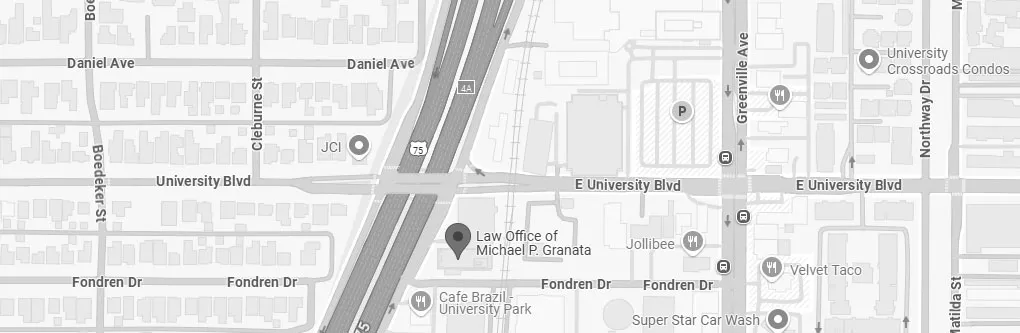
Law Office of Michael P. Granata
6440 N. Central Expressway, Suite 450
Dallas, Texas 75206
Phone: (214) 977-9050
Website: www.dallasdivorcelawyer.com
Divorce is hard. Choosing the right lawyer shouldn’t be. We are here when you are ready.