Few decisions in life feel as heavy as choosing whether to end or pause a marriage. If you are reading this, you are likely carrying a great deal of concerns about your children, your finances, your home, and your future. Take a breath. You are not alone, and you do not have to make this decision today. Our goal is simple: give you clear, honest information so you can make an informed choice, not one driven by fear or false hope.
One of the most common questions we hear as a Dallas divorce attorney team is whether Texas allows legal separation as an alternative to divorce. The short answer is no — Texas does not recognize legal separation the way many other states do. But that does not mean separated spouses in Texas are without options. Several legal tools accomplish many of the same goals, and understanding the difference between them can save you years of confusion, money, and heartache.
This guide walks through how Texas law actually treats separation, how it differs from divorce, what protections are available for couples who want to live apart, and how to decide which path fits your situation. If you want a private, no-pressure conversation about your specific circumstances, you can schedule a consultation with our office at any point.
Does Texas Recognize Legal Separation?
Texas is one of a handful of states that does not offer legal separation as a formal court status. In states like California or New York, spouses can file for a legal separation and receive a court order that divides property, sets custody, and establishes support — all while remaining legally married. Texas has no equivalent filing.
In practical terms, this means that in Texas, you are either married or divorced. There is no middle category the court will formally recognize. You can live apart from your spouse for years, but under Texas law, you are still married — with all the legal and financial consequences that carry.
This matters more than people expect. Because Texas is a community property state, income earned and debts incurred while you are separated — but still married — may be treated as community property. That fact alone drives many spouses to call a family law attorney serving Dallas once they realize how exposed they may be.
Why Texas Doesn’t Offer Legal Separation
Texas family law is built around a relatively clean binary: couples are either married or, following a final decree, divorced. The legislature has historically preferred to let spouses resolve their disputes through divorce, protective orders, or contract rather than through a separate legal status. This approach keeps the system simpler, but it leaves couples who want to pause rather than end a marriage with fewer formal options than in many other states.
Divorce in Texas — What It Actually Means
A divorce in Texas legally dissolves the marriage. Once the judge signs the Final Decree of Divorce, you are free to remarry, your community property is divided, custody and child support are established, and — critically — any new income you earn, or debt you take on is yours alone.
Texas allows both no-fault and fault-based divorce. The most common ground is insupportability, which essentially means the marriage has broken down with no reasonable expectation of reconciliation. Fault grounds still exist — including cruelty, adultery, abandonment, felony conviction, and confinement in a mental hospital — and they can influence property division and spousal support in the right case.
Every Texas divorce involves a minimum 60-day waiting period from the date the petition is filed. In reality, contested cases typically take six months to over a year, while uncontested cases can often be finalized shortly after the 60-day mark.
Uncontested vs. Contested Divorce
If you and your spouse agree on every major issue — property division, debts, custody, visitation, child support, and spousal maintenance — you may qualify for an uncontested divorce. These cases move faster, cost significantly less, and are far less emotionally draining. An uncontested divorce attorney in Dallas can often wrap up the entire process in roughly 60 to 90 days once the petition is filed.
When disagreement exists on even one significant issue, the case becomes contested. A contested divorce in Dallas requires formal discovery, temporary orders hearings, possible mediation, and in some cases a trial. These cases demand a strategic, well-prepared attorney — not someone who will simply file paperwork and hope for the best.
High-Asset and Complex Divorce
Divorces involving businesses, significant retirement accounts, executive compensation, real estate portfolios, or inherited wealth require a different level of analysis. High net worth divorce cases frequently involve forensic accountants, business valuation experts, and careful tracing of separate versus community property. Small mistakes in these cases can cost hundreds of thousands of dollars.
Alternatives to Legal Separation in Texas
Because Texas does not offer formal legal separation, spouses who want to live apart but are not ready to divorce generally rely on three legal tools. Each accomplishes part of what legal separation does in other states, but none is a perfect substitute.
1. Temporary Orders During Divorce
Once a divorce petition is filed, either spouse can request temporary orders from the court. These orders govern how the family functions while the divorce is pending and typically address:
- Who lives in the marital residence
- Temporary custody and a visitation schedule for the children
- Temporary child support
- Temporary spousal support
- Payment of mortgage, utilities, insurance, and debts
- Restrictions on selling or transferring property
Temporary orders give many families the structure and financial stability of a legal separation — but only after a divorce has been filed. They end when the divorce becomes final.
2. Suit Affecting the Parent-Child Relationship (SAPCR)
Parents who do not want to divorce but need enforceable orders regarding their children can file a SAPCR. This is the tool most often used by separated parents who need clarity on custody, visitation, or support without ending the marriage. A child custody lawyer in Dallas or Dallas child support attorney can explain whether a SAPCR fits your situation better than a divorce or a separation agreement.
3. Partition and Exchange Agreements
Texas spouses can contractually convert future community property into separate property through a partition and exchange agreement. In plain language: you and your spouse can agree in writing that your future paychecks, retirement contributions, and debts are yours alone, not community property.
These agreements must be in writing, signed voluntarily, and executed with full financial disclosure. When done properly, they offer many of the financial protections of a legal separation. When done poorly, they can be set aside years later — often at the worst possible time.
Divorce vs. Separation — Key Differences at a Glance
Here are the main practical differences between a Texas divorce and simply living apart:
- Marital status: Divorce ends the marriage. Living apart does not — you remain legally married, with all the rights and obligations that carry.
- Community property: Divorce stops the accumulation of community property as of the divorce date. Living apart does not; income earned during separation may still be community property.
- Debts: After divorce, new debts your spouse takes on are theirs alone. During separation, creditors may still pursue both spouses.
- Health insurance: Spouses typically lose coverage under the other spouse’s plan after divorce. Separation usually preserves coverage.
- Taxes: Divorced individuals file separately. Separated spouses who are still married may still file jointly.
- Remarriage: Only divorce allows you to remarry.
- Estate rights: A spouse retains inheritance and community property rights during separation but loses them after divorce.
- Social Security: Staying married at least 10 years may preserve eligibility for spousal Social Security benefits.
Which Path Is Right for You?
There is no universally correct answer. The right choice depends on your finances, your children, your health, your faith, your goals, and your tolerance for uncertainty. A few honest questions can help clarify things:
- Do you want the legal ability to remarry?
- Are you concerned about your spouse incurring debt in your name?
- Do you need health insurance that you would lose in a divorce?
- Are there religious or cultural reasons to remain married?
- Do you believe reconciliation is genuinely possible?
- Are there children whose stability depends on a clearer structure?
These are exactly the kinds of questions we work through with clients during a Dallas divorce lawyer consultation. No pressure, no sales pitch — just a direct conversation about what the law actually allows and what it would likely look like for your family.
Fathers’ and Mothers’ Rights in Texas
Texas law is intentionally gender-neutral when it comes to custody and support. Judges are required to decide conservatorship based on the best interest of the child, not the parent’s gender. In practice, however, parents on both sides sometimes feel the system does not see them clearly.
Fathers’ rights divorce cases in Dallas often involve fathers who want meaningful, not token, time with their children. Mothers’ rights divorce cases in Dallas often involve mothers who need to protect their children from an unstable co-parenting situation or ensure adequate support. The legal standards are the same — but the strategy, evidence, and presentation can differ significantly. An experienced family lawyer helps you make the strongest possible case under the law as it actually exists, not as either side wishes it did.
How to Choose the Right Dallas Divorce Attorney
The attorney you hire will shape the outcome of your case and, frankly, your quality of life for the next year or more. Choose carefully. Here are the criteria we encourage every prospective client to weigh:
- Experience specifically in Texas family law — not general practice
- Familiarity with local Dallas County courts, judges, and procedures
- A track record of both settlement and litigation, not just one or the other
- Clear, transparent pricing — no vague retainers or hidden billing surprises
- Honest case assessments, even when the honest answer is not what you hoped to hear
- Accessibility — you should not have to chase your attorney for answers
- Verified Dallas divorce attorney reviews from actual former clients
- A clear explanation of your legal options in language you can follow
If you are searching for the best divorce lawyer in Dallas, look past the billboards and marketing slogans. Ask the hard questions. The family lawyer you hire should be someone who will tell you what you need to hear, not just what feels good in the moment.
Dallas Family Law Attorney Qualifications to Look For
At a minimum, look for an attorney who is board-certified or has at least 10 to 15 years of dedicated Texas family law experience, is an active member in good standing of the State Bar of Texas, maintains a practice focused primarily on divorce and family law rather than dabbling across multiple areas, and carries verifiable peer recognition — not just paid directory listings.
Is There an Affordable Divorce Lawyer in Dallas?
Cost is a legitimate concern, and any attorney who tells you not to worry about it is not being straight with you. The honest truth is that the cost of a Texas divorce depends almost entirely on how much the spouses fight. An uncontested divorce with full agreement can often be handled for a modest, predictable fee. A contested divorce with custody disputes and complex assets can cost many times that.
What you should insist on — from any attorney — is transparency. A clear retainer, a clear hourly rate, regular billing statements, and a realistic estimate of where your case is likely to fall on that cost spectrum. Anyone who cannot or will not give you that is not the right choice.
Frequently Asked Questions About Divorce and Separation in Texas
Is legal separation the same as divorce in Texas?
No. Texas does not formally recognize legal separation. Couples who want the legal protections of separation typically use temporary orders during a pending divorce, a SAPCR for child-related issues, or a partition and exchange agreement for financial issues. Only a divorce legally ends the marriage.
How long does a divorce take in Texas?
Texas imposes a mandatory 60-day waiting period from the date the petition is filed. Uncontested cases often finalize shortly after that window. Contested cases typically take six months to over a year, depending on the complexity of the issues and the court’s calendar.
Can I date someone while separated but not divorced in Texas?
Legally, you are still married until the divorce is final, and dating during that time can have consequences. Adultery remains a fault ground for divorce in Texas and can affect property division. Before starting a new relationship, talk with your attorney about the potential impact on your case.
Do I need a reason to get divorced in Texas?
No. Texas allows no-fault divorce on the ground of insupportability. You do not have to prove your spouse did anything wrong. Fault grounds — such as adultery, cruelty, or abandonment — remain available and can affect property division and spousal maintenance in appropriate cases.
How is property divided in a Texas divorce?
Texas is a community property state. Property acquired during the marriage is generally presumed to be community property and subject to a just and right division — which is not always 50/50. Separate property (assets owned before marriage, gifts, and inheritances) remains with the spouse who owns it, provided it can be traced and proven.
What happens to child custody if we separate instead of divorcing?
Without a court order, both parents technically have equal rights to the children, which can create significant conflict. Separated parents can file a SAPCR to establish enforceable custody, visitation, and support orders without ending the marriage. A child custody lawyer in Dallas can help you decide whether a SAPCR or a full divorce fits your situation.
Can I get spousal support in Texas?
Texas allows court-ordered spousal maintenance, but eligibility is limited. You generally must show the marriage lasted at least 10 years and that you lack sufficient property or earning ability to meet your minimum reasonable needs. Exceptions exist for family violence and disability. A spousal support lawyer can evaluate whether you qualify.
How much does a divorce cost in Dallas?
Costs vary widely. A simple uncontested divorce may be handled for a flat or modest fee. A contested divorce with custody disputes or complex assets can run into the tens of thousands. The two biggest cost drivers are the level of conflict between the spouses and the complexity of the assets. A transparent attorney will give you a realistic range for your specific situation.
Is there a divorce attorney near me in Dallas?
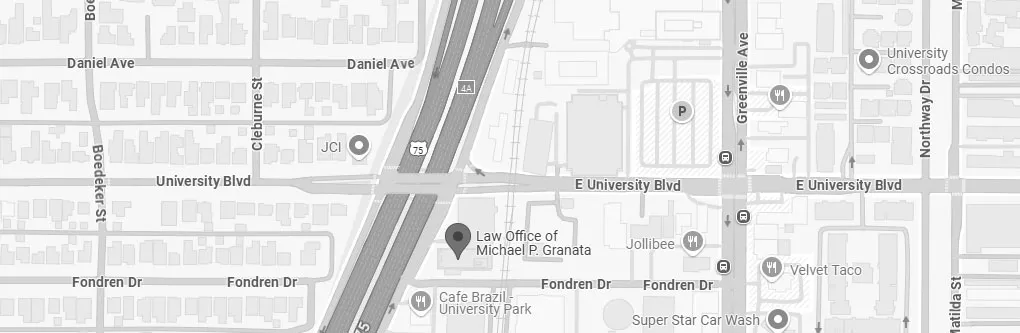
Yes. Our office is located in central Dallas at 6440 N. Central Expressway, Suite 450, Dallas, Texas 75206, and we serve clients throughout Dallas County. You can call us at (214) 977-9050 or schedule a consultation online.
Serving Dallas and Surrounding Communities
Our Dallas divorce law firm proudly serves clients throughout Dallas County. We understand that divorce proceedings often involve local court systems, and our extensive experience in Dallas-area family courts gives our clients a distinct advantage. Whether you need a Dallas area divorce lawyer, a family attorney serving Garland, or representation in any of the surrounding communities, we bring the same level of preparation and care to every case.
Primary Service Areas
- Dallas
- Garland
- Richardson
- Mesquite
- Irving
- DeSoto
- Grand Prairie
- Seagoville
- Duncanville
Core Practice Areas
Our practice focuses on divorce, child custody, child support, asset division, and mediation. We handle both straightforward uncontested matters and highly contested, complex litigation, including high net worth divorce cases and spousal maintenance disputes.
Why Clients Choose the Law Office of Michael P. Granata
You have many options when choosing a Dallas divorce lawyer. Here is what makes our approach different:
- 25+ years of experience in Texas family law, including divorce, custody, support, and high-asset cases
- Personalized, small-firm attention — you work directly with your attorney, not a rotating team of associates
- Transparent pricing with clear retainers and no hidden billing surprises
- Clear, concise explanation of legal options in language you can actually use to make decisions
- Honest case assessment — we will not placate, pander, or tell you only what you want to hear
Our approach is compassionate, but we will be strategic, committed, and tough when court is necessary. We believe in honest communication over empty reassurances, realistic assessments rather than inflated promises, and genuine care for your interests combined with transparent guidance about likely outcomes. Our goal is to help you make informed decisions based on facts — not false hope.
Schedule Your Consultation Today
If you are weighing divorce, considering separation, or simply trying to understand your legal options in Texas, the next step is a confidential conversation. You do not have to commit to anything. You just need accurate information.
Call our office at (214) 977-9050 or request a consultation online. We are located at 6440 N. Central Expressway, Suite 450, Dallas, Texas 75206, and we welcome clients from Dallas, Garland, Richardson, Mesquite, Irving, DeSoto, Grand Prairie, Seagoville, Duncanville, and throughout Dallas County.
You can also learn more about our firm, browse additional articles on our blog, or review our full range of divorce services.
Law Office of Michael P. Granata
6440 N. Central Expressway, Suite 450
Dallas, Texas 75206
Phone: (214) 977-9050
Website: www.dallasdivorcelawyer.com