Introduction: A Case Every Dallas Parent Should Know About
If you’re a parent navigating a custody dispute in Texas, few legal maneuvers are more alarming than a temporary order that suddenly strips you of your right to determine where your children live. Per the published opinion, yhat’s exactly what happened in In re G.R.M., 2026 WL 899121 (Tex. App.—Eastland, Apr. 2, 2026), a case decided just weeks ago that carries significant implications for any Dallas divorce attorney and the families they represent.
In this case, an appellate court was forced to step in after a trial court issued temporary orders that changed a mother’s conservatorship rights without meeting the legal threshold required by Texas law. The case isn’t just a procedural footnote, it’s a powerful reminder of what’s at stake when courts apply the wrong legal standard during high-conflict custody modifications.
For Dallas-area parents, especially those already operating under a final divorce decree, understanding what courts can and cannot do by temporary order is essential. A Dallas divorce attorney with deep knowledge of Texas Family Code procedures can make the difference between protecting your parental rights and losing them, even temporarily.
Case Background: A Post-Divorce Modification That Went Too Far
The Parties and the Original Decree
G.R.M. and T.A.M. divorced in 2025 and share four children together. Their agreed final divorce decree included a standard possession order, with G.R.M. holding the exclusive right to designate the children’s primary residence, a significant parental right under Texas law. See Tex. Fam. Code Ann. §§ 153.311–.317.
Standard possession orders are a cornerstone of Texas custody law. For parents living 100 miles or less apart, they typically provide possession on the first, third, and fifth weekends of each month, plus Thursday evening visits during the school year. The parents had agreed to this structure, with G.R.M. retaining primary residence designation authority.
The Modification Proceeding and Temporary Orders Hearing
T.A.M. subsequently filed a suit to modify the parent-child relationship and sought temporary orders while that case was pending. On February 25, 2026, the 318th District Court of Midland County held a hearing and orally pronounced temporary orders, orders that changed G.R.M.’s conservatorship status entirely, stripped her of the exclusive right to designate the children’s primary residence, and effectively transferred that right to T.A.M.
G.R.M. challenged those temporary orders by filing a petition for writ of mandamus with the Court of Appeals of Texas, Eastland. This is a critical procedural distinction: temporary orders in modification cases are interlocutory, meaning there is no statutory right to a direct appeal. Mandamus, an extraordinary remedy issued only when a court clearly abuses its discretion and no adequate appeal remedy exists, was the only available path to challenge what the trial court had done.
For anyone considering a Dallas divorce lawyer consultation, this case illustrates why the modification process demands as much strategic attention as the original divorce itself.
Legal Analysis: The “Significant Impairment” Standard and Why It Matters
What Texas Law Requires Before a Court Can Change Primary Residence Designation
At the center of this case is Texas Family Code § 156.006(b), which governs temporary orders in modification proceedings. Under that statute, a trial court may not issue a temporary order changing the designation of the parent with the exclusive right to designate primary residence unless two conditions are met: (1) the temporary order is in the best interest of the children, and (2) the order is necessary because the child’s present circumstances would significantly impair the child’s physical health or emotional development.
That second requirement, the “significant impairment” standard, is where the trial court in this case went wrong. Texas courts have consistently held that this is a high burden, requiring evidence of actual bad acts or omissions committed against the children. In re W., 648 S.W.3d 442, 446 (Tex. App.—San Antonio 2021, orig. proceeding). The conduct complained of must be more severe than violating a divorce decree or alienating a child from the other parent. In re B., No. 03-21-00036-CV, 2021 WL 833970, at *7 (Tex. App.—Austin Mar. 4, 2021, orig. proceeding).
Courts have also been clear about what does not meet this standard. A general concern about a child’s emotional development is insufficient. In re M., No. 06-21-00052-CV, 2021 WL 3669607, at *2 (Tex. App.—Texarkana Aug. 18, 2021, orig. proceeding). Evidence of parental alienation, decree violations, or a poor relationship between conservators, standing alone, also falls short. In re H., No. 04-25-00484-CV, 2026 WL 517517, at *5 (Tex. App.—San Antonio Feb. 25, 2026, orig. proceeding).
What the Trial Court Actually Said and Why That Was the Problem
The trial court in G.R.M. did not make any written or on-the-record finding of significant impairment. Instead, the court’s stated reason for transferring primary residence designation was that G.R.M. had “denied [T.A.M.] access” to the children after being warned not to, and that the court “would be upset” if she did so again.
That reasoning, while understandable from a compliance standpoint, was legally insufficient. Denying access and violating court warnings, however serious as contempt or enforcement matters, do not satisfy the significant impairment standard required under § 156.006(b)(1). The Eastland Court of Appeals cited In re S., 228 S.W.3d 214, 219 (Tex. App.—San Antonio 2007, orig. proceeding), in which a court was found to have abused its discretion when it relied on a similarly conclusory rationale.
The absence of the required statutory finding was, in the appellate court’s analysis, dispositive, meaning it resolved the entire case without need to examine any other issue G.R.M. had raised.
The Mandamus Remedy and Its Practical Reach
The Eastland Court of Appeals conditionally granted G.R.M.’s petition and directed the trial court to withdraw its February 25, 2026 temporary orders. A writ of mandamus would issue formally only if the trial court failed to comply by April 17, 2026.
This outcome is a textbook illustration of how mandamus functions as a check on trial court overreach in the family law context. For any Dallas child custody lawyer advising clients in modification cases, this case underscores the importance of identifying, and immediately challenging, temporary orders that fail to satisfy the § 156.006(b) threshold.
It also reinforces that the evidentiary standard for changing primary residence designation at the temporary orders stage is deliberately demanding. Texas law does not permit courts to use the temporary orders process as a shortcut around the full modification hearing where the “material and substantial change” standard applies. A skilled Dallas family law attorney understands these procedural guardrails, and how to use them to protect clients.
Key Takeaways for Dallas Parents Facing Custody Modifications
What does this case mean for you?
If you hold the exclusive right to designate your children’s primary residence under a final Texas divorce decree, that right carries significant legal protection. Courts cannot strip it away through temporary orders without making an affirmative finding of significant impairment, a high evidentiary bar that requires proof of concrete harm to the children, not merely conflict between parents. For families in Dallas, Irving, Richardson, Garland, Mesquite, DeSoto, Grand Prairie, and surrounding communities, this standard applies equally in every Texas courtroom. Consulting an experienced divorce lawyer in Dallas before any temporary orders hearing is essential.
Strategic Insights: Alternative Approaches and Lessons Learned
From what we’ve learned in G.R.M., several alternative approaches may have affected the outcome at the trial court level. Presenting a focused pre-hearing brief on the § 156.006(b)(1) significant impairment standard, including supporting case law, could have prompted the trial court to apply the correct legal test before ruling. Similarly, making a contemporaneous record objection to the absence of the required statutory finding would have preserved that issue for mandamus review even more cleanly. Cases like this one remind us why Dallas child support lawyer and custody clients alike benefit from representation that anticipates appellate implications from the very first hearing.
Speak With a Dallas Divorce Attorney Before Your Next Hearing
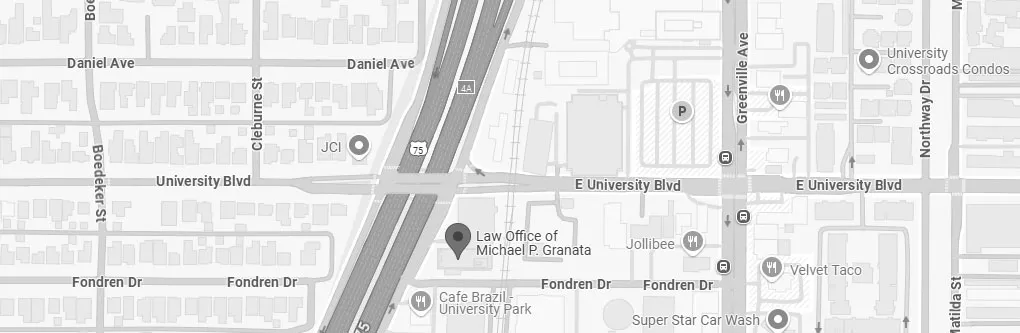
Whether you are facing an initial custody hearing, a modification proceeding, or a temporary orders dispute, the stakes are too high to navigate alone. At the Law Office of Michael P. Granata, our team brings more than 25 years of Dallas family law experience to every case. We serve clients throughout Dallas and surrounding communities including Irving, Richardson, Garland, Mesquite, DeSoto, Grand Prairie, Lakewood, Highland Park, Cockrell Hill, Lancaster, Seagoville, and Duncanville.
We believe in honest assessments, transparent communication, and strategic advocacy, not false promises. If you’re searching for a divorce attorney near me who will give you a clear-eyed view of your legal options, we’re ready to help. Contact us today to schedule your consultation with Michael P. Granata.