Law Office of Michael P. Granata | Dallas Divorce & Family Law | 214-977-9050
Few issues in a Texas divorce carry more emotional weight than the family home. For many couples, the house is more than an asset — it is the backdrop of shared memories, children’s bedrooms, and years of hard work. When a marriage ends, the question of what happens to the house becomes one of the most urgent and contested matters you will face.
If you are considering divorce in the Dallas area, you deserve clear, honest answers — not empty reassurances. Texas property law is complex, and the decisions you make about your home can have lasting financial consequences. This guide walks you through exactly how Texas courts approach the marital home, what your options are, and why working with an experienced Dallas divorce attorney matters.
Whether you are just beginning to explore your options or are already in the middle of a contested proceeding, the Law Office of Michael P. Granata is here to provide the straightforward guidance you need.
Understanding Texas Community Property Law
Texas is one of only nine community property states in the country. This means that most assets — and debts — acquired during the marriage belong equally to both spouses, regardless of whose name is on the title or who earned the income.
What Is Community Property?
In Texas, community property includes nearly everything acquired by either spouse during the marriage: wages, retirement benefits, investments, vehicles, and yes — the family home. If you and your spouse purchased your house after the wedding, it is almost certainly community property, even if only one name appears on the mortgage.
What Is Separate Property?
Separate property, on the other hand, is property owned before the marriage or received during the marriage as a gift or inheritance. If you owned your home before you married, it may qualify as your separate property — but this is not automatic, and the burden of proof falls on the spouse claiming it.
Important exceptions exist. If you used marital funds to pay down a separately owned mortgage, your spouse may have a community interest in the property. These cases require careful legal analysis. For complex asset situations, our high net worth divorce practice handles exactly these scenarios.
Key Takeaway:In Texas, the marital home is presumed to be community property unless you can prove otherwise with clear and convincing evidence. |
How Texas Courts Divide the Home: “Just and Right” Division
Texas does not require a 50/50 split of community property. Instead, courts must divide property in a way that is “just and right,” taking into account the particular circumstances of each spouse and any children involved.
Factors That Influence Property Division
When a Texas court evaluates how to divide the marital home, the judge will consider a range of factors, including:
- The length of the marriage
- Each spouse’s earning capacity and financial condition
- Fault in the breakup of the marriage (adultery, cruelty, abandonment)
- The needs of any minor children
- Each spouse’s health and age
- Disparity in income or earning potential
- Whether one spouse was the primary caregiver
- Each spouse’s separate property holdings
This means that a court can award more than half of the marital estate — including the home — to one spouse if the circumstances justify it. Understanding how these factors apply to your specific situation is something an experienced Dallas divorce attorney can help you assess realistically.
Your Four Main Options for the Marital Home
When it comes to what actually happens to the house, most divorcing couples in Texas face four primary options:
Option 1: Sell the Home and Split the Proceeds
This is the cleanest solution and often the most practical. Both spouses agree to list the property, and the net proceeds after paying off the mortgage and selling costs are divided according to the divorce agreement. This option works well when neither spouse can afford the home independently, or when both want a fresh start.
Option 2: One Spouse Buys Out the Other
One spouse keeps the home by refinancing the mortgage solely in their name and paying the other spouse their share of the equity. This requires the keeping spouse to qualify for the new loan independently — which is a meaningful financial hurdle. Lenders will scrutinize income, credit, and debt-to-income ratios.
This is a common resolution in cases where children are involved and stability is a priority, or where one spouse has a strong emotional or financial reason to retain the property.
Option 3: Deferred Sale (Especially with Minor Children)
Courts sometimes order a deferred sale — allowing one spouse (usually the primary caregiver) to remain in the home until a specific triggering event, such as the youngest child reaching 18 or graduating from high school. The home is then sold and proceeds divided. This approach prioritizes child stability but creates ongoing financial entanglement between ex-spouses.
Option 4: Co-Ownership After Divorce
Rarely, divorcing spouses agree to continue co-owning the property post-divorce — often as an investment strategy or to avoid a forced sale in a down market. This requires a high level of trust and cooperation and is generally not recommended without very clear legal agreements about management, expenses, and exit terms.
Not sure which option fits your situation?Every divorce is different. A personalized assessment from a Dallas divorce attorney can help you understand the financial and legal implications of each path before you commit. |
The Role of Children and Custody in Home Division
When minor children are involved, the question of the home becomes intertwined with child custody arrangements. Texas courts place the best interests of the child at the center of all decisions, and this often influences what happens to the family residence.
Keeping Stability for the Children
Judges are often reluctant to disrupt a child’s school, neighborhood, and daily routine unnecessarily. If one parent is named the primary conservator and the children will primarily reside with that parent, the court may favor allowing that parent to remain in the family home — at least temporarily.
This does not mean the other parent loses their financial interest in the property. The non-custodial parent’s equity stake must still be accounted for, either through a deferred sale arrangement or other asset offset. Our child custody attorneys work closely with our property division team to ensure your parental rights and financial interests are protected simultaneously.
Fathers’ Rights and the Marital Home
Fathers facing divorce often worry — sometimes with good reason — that they will be pushed out of the family home and their children’s daily lives. Texas law does not favor either parent based on gender, and fathers have equal rights to seek primary custody and to assert their property interests.
If you are a father concerned about your rights during property division, you need an advocate who will fight strategically for your position in court — not just tell you what you want to hear.
Mothers’ Rights and Housing Security
Mothers who have been the primary caregiver face their own set of concerns: Can they afford to stay in the home? Will they be forced to uproot the children? What happens if the home is underwater?
A skilled family law attorney will analyze your financial position realistically — including whether keeping the home is actually in your long-term interest — and advocate fiercely for the outcome that truly protects you and your children.
Contested vs. Uncontested Divorce: How It Affects the Home
Uncontested Divorce in Dallas
If both spouses agree on how to handle the home — and all other issues — an uncontested divorce can proceed relatively quickly and affordably. The agreed division is documented in a Final Decree of Divorce, which the court approves. This is typically the least expensive and least adversarial path.
An uncontested divorce attorney in Dallas can help you draft an agreement that is legally sound, enforceable, and protects your interests — even when you and your spouse are cooperating.
Contested Divorce in Dallas
When spouses cannot agree on property division, a judge decides. Contested divorces involving the family home can become lengthy and expensive, particularly when the property’s value is disputed, when separate property claims are at issue, or when one spouse is not cooperating with appraisals or disclosures.
In a contested divorce in Dallas, you need an attorney who is prepared to litigate aggressively if necessary — while still being strategic about when negotiation or mediation offers a better outcome.
Valuation, Appraisal, and Hidden Issues
Before the home can be divided, its value must be established. This is not always as simple as checking Zillow.
How Is the Home Valued?
Courts typically rely on licensed appraisers to determine fair market value. Both spouses may commission their own appraisals, and when they conflict, a third appraiser or court-appointed expert may be called in. The mortgage payoff balance, liens, and any deferred maintenance costs are factored into the net equity calculation.
Hidden Equity and Debt Issues
Watch for these complications that can significantly affect how home equity is calculated and divided:
- Home equity lines of credit (HELOCs) taken out without your knowledge
- Second mortgages or undisclosed liens
- Capital improvements made with separate property funds
- Tax liens or unpaid property taxes
- Commingling of separate and community funds in the property
If you suspect financial irregularities in your divorce, our firm can work with forensic accountants and financial specialists to uncover hidden assets and ensure an accurate, fair accounting. For high-value properties, see our high net worth divorce services.
Spousal Support, Child Support, and the Home
Property division does not exist in isolation. The decision about the home is often intertwined with spousal support and child support obligations.
When Spousal Maintenance Is a Factor
If one spouse will receive spousal maintenance (alimony), this may offset a smaller share of home equity. Conversely, a spouse who is awarded the home but cannot independently sustain its costs may need spousal support to make that arrangement viable. These financial pieces must be evaluated together — not in isolation.
Child Support and Housing Costs
A parent who retains the home for the benefit of the children may receive a larger allocation of equity, with the understanding that they bear greater housing costs. Child support calculations in Texas are formula-driven but adjusted for custody arrangements — and housing expenses play a role in the broader financial picture.
Why You Need an Experienced Dallas Divorce Attorney
Texas property law is nuanced. The difference between an informed legal strategy and a poorly executed agreement can mean tens of thousands of dollars — or your children’s stability.
When you work with the Law Office of Michael P. Granata, you get more than 25 years of Dallas-area family court experience. You get honest communication, realistic assessments, and a legal team that is genuinely committed to protecting your interests.
What Sets Our Firm Apart
- Honest case assessments: We tell you what is realistically achievable — not what you want to hear. We will never inflate your expectations or make promises we cannot deliver.
- Transparent pricing: You will understand exactly what legal representation will cost. No surprise billing or vague fee structures.
- Personalized small-team attention: Your case is not handed off to junior staff. You work directly with an attorney who knows your file.
- Compassionate but strategically tough: We approach your situation with empathy — and we will fight hard in court when that is what your case requires.
- 25+ years in Dallas-area family courts: Experience with the specific judges, procedures, and dynamics of Dallas County family law.
Read what our clients say about working with us on our Dallas divorce attorney reviews page, and visit our blog for more practical insights on Texas divorce law.
Frequently Asked Questions About the House in a Texas Divorce
Can I be forced to sell the house in a Texas divorce?
Yes. If you and your spouse cannot reach an agreement, a Texas judge has the authority to order the sale of the marital home and the division of proceeds. This is one reason why negotiating a settlement — with the help of a skilled Dallas divorce attorney — is almost always preferable to leaving the decision to a court.
What if my name is not on the deed?
In Texas, the name on the deed does not determine ownership for divorce purposes. If the property was purchased during the marriage with marital funds, it is likely community property regardless of how title is held. You may still have a legal interest in the home.
Can I keep the house if I have children?
Having children does not automatically entitle you to keep the house, but it is a significant factor. Courts prioritize the best interests of the children, and keeping them in a stable home environment is often given substantial weight. The financial feasibility of the keeping spouse maintaining the home independently is also evaluated.
How long does it take to resolve the house issue in a divorce?
Uncontested divorces in Texas can be finalized in as few as 61 days (the mandatory waiting period). Contested property disputes can take considerably longer — months or even years in complex cases. Having experienced legal representation often accelerates resolution by facilitating negotiation and avoiding unnecessary litigation.
What is a Dallas divorce lawyer consultation like?
A Dallas divorce lawyer consultation at our firm is a confidential, no-pressure conversation about your specific situation. We review the key facts of your case, explain how Texas law applies, outline your realistic options, and give you an honest assessment of outcomes — including a frank discussion of costs. There are no inflated promises, just clear information to help you make informed decisions.
How do I know if an attorney is qualified to handle my divorce?
When evaluating Dallas family law attorney qualifications, look for: years of experience specifically in Texas family law, familiarity with Dallas County family courts, a clear explanation of their approach and fees, and a communication style that respects your intelligence and gives you honest information. Board certification in family law by the Texas Board of Legal Specialization is also a meaningful credential.
Is there an affordable option for divorce in Dallas?
Cost depends heavily on whether your divorce is contested or uncontested. An affordable divorce lawyer in Dallas can help you resolve your divorce efficiently without unnecessary litigation — but this requires both parties to approach the process reasonably. We offer transparent pricing so you always know what your representation will cost.
Serving Dallas and Surrounding Communities
Our Dallas divorce law firm proudly serves clients throughout Dallas County and surrounding communities. We understand that divorce proceedings involve navigating local court systems, and our extensive experience in Dallas-area family courts gives our clients a distinct advantage.
Primary Service Areas
- Dallas
- Garland
- Richardson
- Mesquite
- Irving
- DeSoto
- Grand Prairie
- Seagoville
- Duncanville
Whether you are searching for a Dallas area divorce lawyer, a family attorney serving Garland, or a family law attorney serving Dallas and surrounding communities, our team is ready to help.
We handle the full range of family law matters, including: Divorce, Child Custody, Child Support, Asset Division, Spousal Maintenance, and Mediation.
Take the First Step: Schedule Your Consultation
Divorce is one of the most consequential decisions you will ever make. The choices you make now — about the house, about your children, about your financial future — will follow you for years. You deserve an attorney who will give you honest answers, real strategy, and genuine commitment to your case.
That is what we offer. Not false hope. Not inflated promises. Just clear legal guidance, 25+ years of Dallas-area family court experience, and a team that will fight for the outcome you deserve.
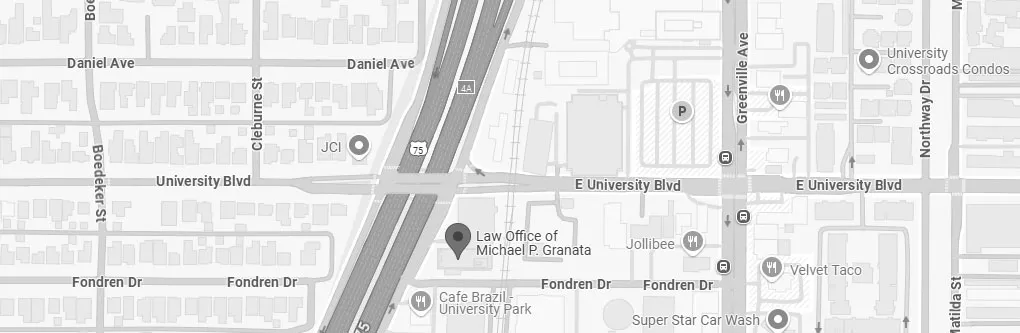
Law Office of Michael P. GranataDallas Divorce & Family Law Attorney 6440 N. Central Expressway, Suite 450, Dallas, TX 75206 Phone: (214) 977-9050 Schedule your consultation online: dallasdivorcelawyer.com/consultation |
When you are ready to talk, we are here. Schedule your Dallas divorce lawyer consultation today and get the honest, experienced legal guidance your situation demands.
Related Resources
Divorce Services | Child Custody | Child Support | Spousal Support | High Net Worth Divorce | About Us | Blog
© Law Office of Michael P. Granata | www.dallasdivorcelawyer.com | (214) 977-9050