Introduction: When “Age 18” Is Not the Finish Line
Most parents assume child support ends when a child turns 18 or graduates high school. For families raising a child with a severe disability, Texas law tells a different story.
Per the published opinion, in F. v. P., No. 03-24-00426-CV, 2026 WL 1842569 (Tex. App.—Austin June 26, 2026), the Third Court of Appeals affirmed an order requiring a father to pay child support well above the statutory guidelines for his 19-year-old son with Level 3 autism. The support was set to more than triple once the young man aged out of his special-needs school.
The case answers three questions that come up regularly in our office. Can support continue indefinitely for an adult child? Can a court order more than guideline support? And what evidence does a court need to justify it?
In more than 25 years of Texas family law practice, our firm has seen these issues arise most often in modification cases, where a decree written when a child was young no longer fits the family’s reality. If you are the parent of a child with special needs, this decision deserves your attention, and a conversation with a Dallas divorce attorney may be worth having before your child turns 18.
Case Background: A Decree That No Longer Fit
N.F. and B.P. married in 2001 and divorced in 2008. Their son, referred to in the opinion by the pseudonym “E.,” was diagnosed with Level 3 autism around age two and later with an intellectual development disability and other conditions.
The original decree gave the parents equal possession and divided various expenses between them. For years, by both parents’ accounts, they co-parented collaboratively.
That changed as E. approached adulthood. His behavior became more difficult to manage, and the testimony described incidents that put his own safety and the safety of others at risk. He required constant, one-on-one supervision for daily living, including hygiene, meals, and structured activity.
In 2022, shortly before E.s 18th birthday, B.P. filed a petition to modify. She asked the court to:
- Extend child support and medical support indefinitely past E.’s 18th birthday
- Order payments made to her as trustee of a special needs trust for E.’s benefit
- Account for the rising cost of qualified caregivers
At the March 2024 bench trial, the financial picture was clear. N.F. had about $12,893 per month in statutory net resources; B.P. had about $15,679. B.P. presented detailed budgets showing E.’s needs at roughly $7,387 per month while he attended school, rising to about $11,114 per month once he aged out in June 2026. Most of that increase was full-time care, calculated at $35 per hour for 50 hours per week.
N.F. proposed that he care for E. himself on weekdays and pay no periodic support beyond therapy and medical costs. The trial court instead ordered him to pay $2,211.23 per month, increasing to $5,206.62 per month in June 2026. Guideline support alone would have been $1,610 per month. He appealed.
Legal Analysis: How the Court Upheld Above-Guideline Support
What Is the Standard of Review for Child Support Orders in Texas?
Texas appellate courts review child support decisions for abuse of discretion. I. v. I., 339 S.W.3d 74, 78 (Tex. 2011). A trial court does not abuse its discretion when “some evidence of a probative or substantive character” supports its decision, even if the evidence conflicts. Z. v. M., 212 S.W.3d 582, 587 (Tex. App.—Austin 2006, pet. denied).
In a bench trial, the judge is the “sole judge of the credibility of the witnesses.” That deference shaped nearly every part of this appeal.
When Can a Texas Court Order Child Support Above the Guidelines?
Under Texas Family Code § 154.126, when the paying parent’s monthly net resources exceed the statutory cap (applied as $9,200 in this case), the court presumptively applies guideline support to the capped amount. The court may then order additional support based on “the income of the parties and the proven needs of the child.”
The key phrase is proven needs. As the Dallas Court of Appeals has held, “the record must contain evidence of the ‘proven needs’ of the child.” In re M.A.M., 346 S.W.3d 10, 17 (Tex. App.—Dallas 2011, pet. denied). Needs are not limited to bare necessities, but courts may not base them on the parents’ lifestyle or ability to pay. R. v. R., 860 S.W.2d 414, 417 n.3 (Tex. 1993).
N.F. argued the mother’s budget was contradictory, speculative, and included expenses unrelated to E.’s unmet needs. The court disagreed on each point:
- Conflicting testimony about caregiving hours and costs was for the trial judge to resolve.
- The budget was not speculative because it rested on historical caregiving costs and itemized worksheets.
- Income disparity was accounted for. The trial court allocated only 41.35% of the additional needs to the father and 58.65% to the higher-earning mother, as § 154.126(b) requires.
How Does Texas Law Treat Support for an Adult Child with a Disability?
Texas Family Code § 154.302 allows a court to order support for an indefinite period if the child requires substantial care and personal supervision because of a disability, will not be capable of self-support, and the disability existed (or its cause was known) on or before the child’s 18th birthday. Payments may be directed to a parent, guardian, or special needs trust.
When setting the amount, § 154.306 requires the court to give “special consideration” to four factors. The court of appeals walked through each:
- Needs directly related to the disability. Both parents agreed E. needed constant supervision. The court held that the testimony supported a finding that all of his caregiving needs were directly related to his disability, citing T. v. S., 483 S.W.3d 87, 96 (Tex. App.—Houston [1st Dist.] 2015, no pet.).
- Who pays for or provides care. Both parents and their spouses worked full-time. The trial court found the mother bore more of the caregiving burden and that the father had not exercised his full possession time under the decree.
- Each parent’s financial resources. Both parents could afford to contribute.
- Other available resources. E. would age out of his school program in 2026, adult ABA therapy was hard to secure, typical camps and sitters were unworkable, and Social Security benefits had not yet been approved.
Importantly, these four factors are not exclusive. Courts apply them alongside the general child support guidelines. In re J.M.W., 470 S.W.3d 544, 552–54 (Tex. App.—Houston [14th Dist.] 2014, no pet.).
A Procedural Point Worth Noting
The court also noted that some challenges to specific findings of fact were raised for the first time in a reply brief and were therefore waived. H. v. T.W.C.C., 143 S.W.3d 416, 439 (Tex. App.—Austin 2004, pet. denied). Appellate issues must be preserved in the original brief.
Practical Implications
F. v. P. confirms that Texas courts will look forward, not just backward. The trial court built a stepped support order that anticipated a known future event, the end of school eligibility, and the appellate court upheld it. For parents of children with significant disabilities, a well-documented future budget can be as important as past receipts. An experienced Dallas divorce attorney can help build that forward-looking record from day one.
Key Takeaways for Dallas Families
- Child support does not automatically end at 18 if your child has a disability that existed before adulthood and prevents self-support.
- Above-guideline support is possible when the paying parent’s income exceeds the statutory cap and the child’s proven needs justify it.
- Documentation wins cases. Itemized budgets, caregiver rates, and testimony about daily care carried the day here.
- Timing matters. Filing before the child turns 18 helps avoid gaps in support.
A Dallas child support lawyer can help you build this kind of record from the start.
Strategic Insights: What We’ve Learned from This Case
Disputes over adult disabled-child support are won or lost on evidence. In cases like this one, different strategies might have included presenting an independent, itemized counter-budget, offering expert testimony on care costs and available programs, or documenting a concrete, workable caregiving plan. On appeal, alternative approaches could include raising every fact-finding challenge in the opening brief. An experienced Dallas divorce attorney evaluates these options early, while the record is still being built.
Frequently Asked Questions
Can I get child support for my adult disabled child in Texas?
Yes. Under Texas Family Code § 154.302, a court may order support for an indefinite period if the child cannot support himself or herself because of a disability that existed, or whose cause was known, before age 18.
Can child support be paid into a special needs trust?
Yes. Texas law allows the court to designate a special needs trust to receive support payments, which can help protect eligibility for needs-based government benefits.
Can a judge order more than guideline child support?
Yes, when the paying parent’s net resources exceed the statutory cap and the child’s proven needs justify additional support. The additional amount is allocated between the parents based on their circumstances.
Talk to a Dallas Divorce Attorney Who Will Tell You the Truth
Every family’s situation is different, and cases involving children with special needs require both precision and compassion. For more than 25 years, the Law Office of Michael P. Granata has given clients honest assessments, not false promises, and transparent communication about realistic outcomes.
Whether you need a Dallas divorce lawyer, a Dallas child custody lawyer, or guidance on a high-net-worth divorce or spousal support, our Dallas family law attorney team serves Dallas, Richardson, Irving, Garland, Mesquite, DeSoto, Grand Prairie, Lakewood, Highland Park, Cockrell Hill, Lancaster, Seagoville, and Duncanville.
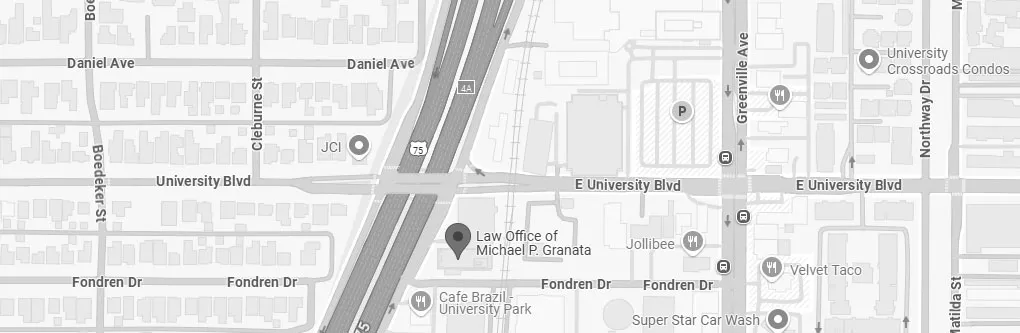
Searching for a “divorce attorney near me”? Schedule your Dallas divorce lawyer consultation today by calling (214) 977-9050, or visit our office at 6440 N. Central Expressway, Suite 450, Dallas, TX 75206. For more case analysis, visit our blog.