For many couples in the Dallas area, the decision to end a marriage is already one of the hardest of their lives. When immigration status enters the picture, that decision can start to feel impossible. We hear it routinely: a spouse who knows the marriage is over but stays anyway, afraid that filing for divorce will trigger deportation, separate them from their children, or expose family members to enforcement. In the current climate, those fears are not irrational. They are also, in many cases, based on incomplete information about what Texas law actually permits and what federal protections actually exist.
This guide is written for people in mixed-status households — where one spouse is a U.S. citizen or lawful permanent resident and the other is undocumented, on a temporary visa, or holds a conditional green card — and for households where both spouses are undocumented. It covers what a Texas divorce realistically looks like in these situations, the protections you may already qualify for, and how to think about your next steps.
It is not a substitute for legal advice tailored to your facts. Family law and immigration law intersect in technical ways, and the wrong move at the wrong time can have permanent consequences. An experienced Dallas divorce lawyer working in coordination with an immigration attorney is usually the right team for these cases.
The Current Climate: Why Mixed-Status Couples Feel Trapped
Immigration enforcement is at levels we have not seen in years. Workplace operations, expanded use of expedited removal, and aggressive interior enforcement have made undocumented and mixed-status families more cautious about every interaction with government — including family court. Abusive spouses know this. Some of the most common tactics we see used to control immigrant partners are:
- Threatening to call ICE if the partner files for divorce or seeks a protective order
- Hiding, withholding, or destroying immigration documents — passports, I-94s, work permits, green cards
- Refusing to file or follow through on petitions that would adjust the spouse’s status
- Telling the spouse, falsely, that filing for divorce will automatically result in deportation
- Threatening to take the children to another country, or to report the spouse to authorities so the children stay with the citizen parent
If any of this sounds familiar, you are not alone, and you are not without options. The law recognizes exactly this pattern of coercion and has built in specific protections to address it.
Texas Divorce Law Does Not Require Citizenship From Either Spouse
The first thing to know is the most important: under Texas Family Code § 6.001, a spouse can file for divorce if the marriage has become “insupportable.” Texas does not require either spouse to be a U.S. citizen or a lawful permanent resident to file or to be served. The state’s jurisdictional requirements concern residency in Texas — generally six months in the state and 90 days in the county — not immigration status.
Filing for Divorce in Texas as an Undocumented Spouse
An undocumented spouse can file for divorce in Texas. An undocumented spouse can be served with divorce papers in Texas. The case proceeds the same way it would for any other couple: original petition, service or waiver of service, temporary orders if needed, mediation, and either a settled final decree or a contested trial. The judge will not ask either spouse to produce a green card or a Social Security number to enter a divorce decree.
That said, immigration status can affect tactical decisions. Where you file matters. Whether you appear in person at a hearing matters. Whether to use a sworn declaration or appear by Zoom matters. These are not theoretical concerns. A thoughtful family law attorney serving Dallas will help you weigh them before filing.
Service of Process and Confidentiality
Most Texas family courts allow service by alternative means when traditional service is not safe — including private process server, mailed service with court approval, and in limited cases, service by publication. If you are worried about an abusive spouse using divorce papers as a pretext for further harm, including immigration-based retaliation, ask your attorney about a protective order under Title 4 of the Texas Family Code and motions to seal certain filings. Confidentiality of your address can be preserved through these tools.
Property Division in a Mixed-Status Texas Divorce
Texas is a community property state. With limited exceptions, every asset acquired during the marriage — wages, retirement contributions, real estate, vehicles, business interests — belongs to the marital estate and must be divided in a manner that is “just and right.”
An undocumented spouse has the same property rights as a citizen spouse. Texas courts do not discount community property claims based on immigration status. Wages earned by an undocumented spouse during the marriage are still community property. A home purchased during the marriage is still community property, even if titled in only one spouse’s name. If your case involves significant assets, a closely held business, or international property, work with a Dallas high net worth divorce lawyer who has handled tracing claims, foreign property characterization, and complex valuations.
Several practical issues come up often:
- Wages paid in cash. Community property exists regardless of how wages were paid. Bank records, tax returns (including ITIN filings), employer records, and lifestyle evidence all help establish the community estate.
- Foreign assets. Real estate, accounts, or businesses held in another country are still subject to Texas property division. Enforcement in the foreign jurisdiction can be a separate problem requiring local counsel abroad.
- Separate property tracing. Property a spouse owned before marriage, or received by gift or inheritance during marriage, can remain separate — if it can be traced. That burden falls on the spouse claiming the separate character, by clear and convincing evidence.
- Spousal maintenance. Under Texas Family Code § 8.051, immigration status can be relevant to a spousal support analysis, particularly where a spouse’s ability to work lawfully affects their capacity to meet minimum reasonable needs.
Child Custody for Mixed-Status Couples in Texas
Texas courts decide custody (called “conservatorship” under Texas law) based on the best interest of the child under Texas Family Code § 153.002. Immigration status is not on the statutory best-interest list. Judges may not strip a parent of conservatorship or possession simply because that parent is undocumented. In practice, however, status can become a factor when it directly affects a parent’s ability to function as a parent — for example, if there is a credible risk that the parent will be removed from the country and unable to exercise possession, or if a parent has threatened to relocate a child internationally. A skilled child custody lawyer in Dallas will frame the case around the child’s actual needs and the parent’s actual track record, not around status alone.
International Travel and Relocation Concerns
When one parent has ties to another country, courts often address this directly in the final order. Common provisions include geographic restrictions on the child’s primary residence, requirements that both parents consent in writing before international travel, passport-holding arrangements, and Hague Convention-related language. If you are worried about a parent removing a child to a non-Hague country — meaning a country that has not signed the Hague Convention on the Civil Aspects of International Child Abduction — raise it early in the case and document the basis for your concern.
Child Support Is Not Affected by Immigration Status
A child has the right to support from both parents, regardless of either parent’s immigration status. An undocumented parent can be ordered to pay child support. A U.S. citizen parent cannot avoid paying child support by pointing to the other parent’s status. The Office of the Attorney General of Texas enforces child support orders without regard to the obligor’s immigration status. A Dallas child support attorney can walk you through how income is calculated, how cash income is handled, and how arrears are pursued.
Federal Protections for Immigrant Spouses Facing Abuse
This is the part that surprises many clients: federal immigration law contains specific provisions for noncitizens trapped in abusive marriages with U.S. citizens or lawful permanent residents. None of these are handled in the Texas family court. All of them are filed with the U.S. Citizenship and Immigration Services (USCIS) and require an immigration attorney. But the family law strategy and the immigration strategy should be coordinated from the beginning, not run on separate tracks.
VAWA Self-Petitions (Violence Against Women Act)
The Violence Against Women Act, despite its name, applies to victims of any gender. It allows a noncitizen who has been subjected to “battery or extreme cruelty” by a U.S. citizen or lawful permanent resident spouse to self-petition for lawful permanent residence by filing Form I-360 — without the abuser’s knowledge, consent, or participation. There is no filing fee for the I-360.
Several points are worth understanding:
- “Extreme cruelty” is defined broadly. It includes threats of violence, controlling behavior, financial abuse, isolation, threats of deportation, destruction of immigration documents, and severe psychological abuse. Physical violence is not required.
- A police report is not required. Many successful VAWA cases rely on the petitioner’s own sworn declaration, supported by medical records, therapist statements, photographs, journals, and witness affidavits.
- A petitioner can file after a divorce, provided the divorce occurred within two years of filing and was connected to the abuse.
- VAWA self-petitioners can adjust status even if they entered the U.S. without inspection — a benefit available almost nowhere else in immigration law.
- USCIS confidentiality rules prohibit the agency from disclosing case information to the abusive spouse.
U Visas for Crime Victims
A U visa is available to victims of certain qualifying crimes — including domestic violence, sexual assault, stalking, and felonious assault — who have suffered substantial physical or mental abuse and who help law enforcement. Unlike VAWA, the U visa does not require that the abuser be a citizen or LPR; the immigration status of the abuser is irrelevant. The U visa requires certification from a qualifying law enforcement agency. Backlogs are very long, but eligibility is what matters first; deferred action and work authorization can become available before the visa is fully adjudicated.
Conditional Green Cards and the I-751 Waiver
If you received a green card based on a marriage less than two years old, your green card is conditional. Normally, removing the conditions requires filing Form I-751 jointly with your spouse. If you divorce, your spouse dies, or your spouse becomes abusive, you can file an I-751 with a waiver of the joint filing requirement. The waiver can be based on a good-faith marriage that ended in divorce, on battery or extreme cruelty, or on the fact that termination of status would cause extreme hardship.
This is a critical point: divorce does not automatically destroy a conditional resident’s path to a permanent green card. With a properly prepared waiver and a Texas divorce decree, conditional residents routinely complete the process after a divorce.
When the U.S. Citizen Spouse Is the Petitioner: The Form I-864 Trap
For U.S. citizen spouses who sponsored their noncitizen partner using Form I-864 (Affidavit of Support), pay careful attention. Divorce does not terminate the I-864. The financial obligation to maintain the sponsored immigrant at 125% of the federal poverty line continues until the sponsored spouse becomes a U.S. citizen, can be credited with 40 quarters of qualifying work, permanently departs the United States, or dies. Courts in several jurisdictions have enforced the I-864 as a binding contract against the citizen sponsor after divorce, including for amounts well beyond what a state court would have ordered as spousal maintenance.
This obligation should be addressed in the property settlement and reflected in the negotiation strategy. Ignoring it does not make it disappear, and it can resurface years after the divorce decree is signed.
Alternatives to Filing for Divorce Immediately
Texas does not recognize legal separation. You are either married or divorced. For couples who are not ready to file — often because of immigration timing — there are intermediate options that can stabilize the situation:
- A partition and exchange agreement, which can divide community property and convert future earnings into separate property.
- Suit Affecting the Parent-Child Relationship (SAPCR), which establishes custody, possession, and child support without dissolving the marriage.
- Protective orders under Title 4 of the Family Code, which can grant exclusive use of the home, possession of children, and protective relief immediately.
- Postmarital agreements address rights and obligations going forward.
These tools are not long-term substitutes for divorce, but they can buy time for an immigration case to mature or for safety planning to be completed.
Practical Safety Planning Before You File
If you are preparing to leave a marriage and your spouse holds your immigration documents or has threatened to use status against you, a few practical steps tend to matter most:
- Make copies (photos are fine) of every immigration document you can access: passports, I-94s, I-797 approval notices, EADs, green cards, marriage certificates, and your children’s documents.
- Open an individual bank account at a different bank from any joint accounts, and route any income there if you can do so safely.
- Document the abuse contemporaneously — dated notes, photos of injuries or damaged property, screenshots of threatening messages.
- Identify a safe address — a trusted friend, family member, or a domestic violence shelter — where mail can be sent confidentially.
- Speak with both a family law attorney and an immigration attorney before you tell your spouse you are leaving, if it is safe to wait.
Working With a Dallas Divorce Attorney Who Understands the Stakes
These cases are not normal divorces. The wrong filing, the wrong courthouse appearance, or the wrong sworn statement can affect a person’s immigration future for the rest of their life. The right approach is built on four things:
- Coordination between family law and immigration counsel from day one
- Honest assessment of risk — not minimization, and not catastrophizing
- Strategy that fits the facts and the client, not a template pulled off a shelf
- Transparent pricing, so financial pressure does not push the client into a bad decision
If you are searching online for a divorce attorney near me because you are in this situation, prioritize firms that will tell you the truth about your case — including the parts you may not want to hear — rather than firms that promise outcomes they cannot deliver. The best divorce lawyer in Dallas for a mixed-status case is not necessarily the loudest one in the advertisements. It is the one who will sit down with you, look at your full picture, and tell you what is actually achievable.
Frequently Asked Questions
Can my spouse have me deported if I file for divorce in Dallas?
Filing for divorce in a Texas court does not, by itself, cause deportation. State courts do not enforce federal immigration law. That said, an angry spouse can report you to ICE, and federal enforcement is a separate process. Talk with both a family law and immigration attorney before filing if you have concerns about retaliation. A Dallas divorce lawyer consultation is the right place to start.
Will my immigration status affect child custody in Texas?
Texas courts decide custody based on the best interest of the child, not on immigration status. Status can become a practical factor only when it directly affects parenting ability — such as a credible risk of removal, or threats to take a child internationally. A child custody lawyer in Dallas can help frame your strengths as a parent and address any status-related concerns the court might raise.
What is the difference between an uncontested divorce attorney in Dallas and a contested divorce in Dallas attorney for mixed-status couples?
An uncontested case settles by agreement and moves quickly. Many mixed-status couples actually prefer this route because it keeps both spouses out of repeated courthouse appearances. A contested case involves litigation, temporary orders hearings, and sometimes trial. The choice depends on whether you and your spouse can agree on custody, support, and property, not on immigration status itself.
How do I find an affordable divorce lawyer in Dallas if I cannot work legally?
Cost is a real concern for many immigrant spouses. Look for firms with transparent flat-fee or staged-fee structures, and ask directly about payment plans. Free and low-cost legal aid organizations in Dallas County also assist victims of domestic violence regardless of status, and some bar association referral programs offer reduced-fee initial consultations.
What Dallas family law attorney qualifications should I look for?
Look for Texas Bar admission in good standing, substantial family law experience (ideally 15 or more years), familiarity with mixed-status cases, a clear willingness to coordinate with immigration counsel, and a written engagement agreement that explains scope and fees up front. Dallas divorce attorney reviews on Google, Avvo, and Martindale-Hubbell can also help you vet candidates — but read them carefully. Patterns matter more than individual five-star or one-star outliers.
Does Texas favor mothers or fathers in custody decisions?
Texas law is gender-neutral. Both fathers’ rights divorce Dallas cases and mothers’ rights divorce Dallas cases are decided under the same best-interest standard. Outcomes turn on facts — primary caregiver history, work schedules, stability of housing, the child’s school and friendships, and the child’s expressed preferences when old enough — not on the parent’s sex.
Can I file for VAWA and divorce at the same time?
Yes. Many clients file VAWA self-petitions while their Texas divorce is pending. The two cases run on separate tracks — VAWA at USCIS, divorce in state court — but they should be coordinated by counsel to make sure that statements made in one case do not undermine the other.
My spouse threatened to call ICE if I file. Is that illegal?
Using a threat of immigration enforcement to control a spouse is a recognized form of coercion and is one of the categories of “extreme cruelty” that supports a VAWA self-petition. In some circumstances, it can also support a protective order in Texas family court. Document the threats — texts, voicemails, dated written notes — and bring them to your consultation.
Serving Dallas and Surrounding Communities
Our Dallas divorce law firm proudly serves clients throughout Dallas County and the broader DFW metroplex. We understand that divorce proceedings often involve local court systems, and our extensive experience in Dallas-area family courts gives our clients a distinct advantage — particularly in sensitive mixed-status cases where judicial familiarity and procedural know-how matter.
Primary service areas:
- Dallas
- Garland
- Richardson
- Mesquite
- Irving
- DeSoto
- Grand Prairie
- Seagoville
- Duncanville
Whether you are looking for a Dallas area divorce lawyer for an uncontested case or a family attorney serving Garland for a contested matter involving immigration considerations, we handle the full range of family law issues: divorce, child custody, child support, asset division, and mediation.
Why Choose the Law Office of Michael P. Granata
- 25+ years of Texas family law experience
- Personalized small-team attention — you work with your attorney, not a rotating cast of associates
- Transparent pricing with no surprises
- Clear, concise explanation of your legal options
- Honest case assessment — no pandering, no false reassurance, no inflated promises
- Compassionate approach combined with strategic toughness when court is necessary
- Genuine care for your interests, with transparent guidance about realistic outcomes
We do not promise outcomes we cannot deliver. We do not tell clients what they want to hear when the facts say otherwise. Our goal is to put you in a position to make informed decisions based on real information — not false hope.
Schedule Your Confidential Consultation
If you are in a mixed-status marriage and considering divorce, the worst thing you can do is wait alone with the questions. Call our office to schedule a confidential consultation with a Dallas divorce attorney who has handled these cases for more than two decades.
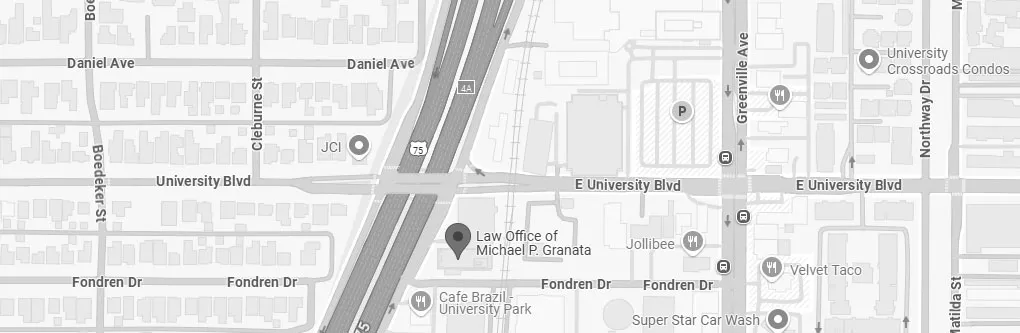
Law Office of Michael P. Granata
6440 N. Central Expressway, Suite 450
Dallas, Texas 75206
Phone: (214) 977-9050
Website: dallasdivorcelawyer.com | More resources on our blog.