If you’re considering divorce in Dallas, you’re likely feeling overwhelmed by the emotional and legal complexities ahead. Beyond the personal challenges, you may be surprised to learn that where you file for divorce can significantly impact the outcome of your case. The differences between state divorce laws across America have created a legal landscape that some call “divorce tourism”—where couples strategically choose jurisdictions to gain advantages in their proceedings.
Understanding the constitutional framework that governs divorce law, the variations between states, and what this means for your case is crucial. As an experienced Dallas divorce attorney with over 25 years of practice, I’ve seen firsthand how jurisdiction choices affect outcomes in property division, child custody, and spousal support cases.
The Constitutional Framework: Why Divorce Law Remains a State Matter
The United States Constitution doesn’t explicitly mention marriage or divorce. Under the Tenth Amendment, powers not delegated to the federal government are reserved to the states. This constitutional principle has kept family law—including divorce—firmly under state control for over two centuries.
Historical Context of State-Controlled Divorce Law
Historically, each state developed its own approach to marriage dissolution based on local values and customs. This created significant disparities. In the early 20th century, some states required proof of fault (adultery, cruelty, abandonment) for divorce, while others adopted more lenient standards. Nevada famously built part of its economy around liberal divorce laws and short residency requirements.
The 1970s brought widespread adoption of no-fault divorce laws across America, reducing—but not eliminating—interstate differences. Today, while all states permit no-fault divorce, the details vary dramatically. Texas, for instance, requires spouses to prove either insupportability (the no-fault ground) or specific fault grounds like adultery or cruelty when seeking a divorce.
Federal Limits on State Divorce Laws
While states control divorce proceedings, federal law imposes certain boundaries. The Full Faith and Credit Clause of the Constitution requires states to recognize divorces granted in other states. Federal laws also govern specific aspects that intersect with divorce:
- Military pensions and benefits under the Uniformed Services Former Spouses’ Protection Act
- Retirement accounts governed by ERISA (Employee Retirement Income Security Act)
- Interstate child support enforcement through federal programs
- Bankruptcy protections that may affect divorce settlements
These federal interventions create a patchwork system where divorce remains primarily state-controlled but subject to federal oversight in specific areas.
Could Divorce Law Be Federalized? The Constitutional Debate
The question of whether Congress could federalize divorce law raises significant constitutional issues. Legal scholars debate whether such a move would be permissible under current constitutional doctrine.
Commerce Clause Arguments for Federal Divorce Law
Proponents of federalization might argue that the Commerce Clause—which grants Congress power to regulate interstate commerce—could justify federal divorce standards. They point to the economic impacts of divorce, including:
- Asset division involving interstate property and businesses
- Child support and spousal support payments crossing state lines
- Relocation of spouses and children for strategic legal advantages
However, the Supreme Court has historically been reluctant to extend Commerce Clause authority into areas of traditional state control, particularly domestic relations.
Equal Protection and Uniformity Concerns
Another constitutional argument centers on equal protection. Current state-by-state variations mean that identical couples in different states face vastly different outcomes. A Dallas couple seeking an uncontested divorce might finalize their case within 60 days of filing, while couples in other states could wait six months or longer due to mandatory separation periods.
Critics argue this creates inequality based on geography rather than merit. However, federalism itself contemplates such variations as a feature, not a bug—allowing states to serve as “laboratories of democracy” where different approaches can be tested. For couples seeking an uncontested divorce in Dallas, Texas law provides relatively efficient procedures compared to many other jurisdictions.
How State Divorce Laws Differ: Key Variations That Matter
The differences between state divorce laws aren’t merely technical—they have real-world consequences for dividing assets, determining custody, and calculating support. Understanding these variations is essential when working with a family law attorney.
Community Property vs. Equitable Distribution States
Perhaps the most significant difference between states involves how marital property is divided:
Community Property States (including Texas): Property acquired during marriage is presumed to be owned equally by both spouses, regardless of whose name is on the title. Texas courts divide community property in a “just and right” manner, which often—but not always—means a 50/50 split. Separate property (owned before marriage or received by gift or inheritance) typically remains with the original owner.
Equitable Distribution States: Courts divide marital property based on factors like each spouse’s economic circumstances, contributions to the marriage, and future earning capacity. This doesn’t necessarily mean equal division—a court might award 60% to one spouse and 40% to the other based on fairness considerations.
For couples with substantial assets, these differences can mean hundreds of thousands—or even millions—of dollars. A high net worth divorce in Dallas requires careful attention to characterizing assets as community or separate property.
Spousal Support: Wide Variations in Availability and Duration
Spousal support laws vary dramatically by state. Texas has relatively restrictive alimony laws compared to many states. To qualify for court-ordered spousal maintenance in Texas, the requesting spouse must generally prove:
- The marriage lasted at least 10 years, AND
- The requesting spouse lacks sufficient property to provide for minimum reasonable needs, AND
- The requesting spouse cannot earn sufficient income due to incapacitating disability, caring for a disabled child, or lack of earning ability
In contrast, states like California and New York have more liberal spousal support frameworks. California courts consider a lengthy list of factors and may award support indefinitely in long-term marriages. An experienced spousal support lawyer can help you understand what’s possible under Texas law.
Child Custody Standards Across State Lines
While all states must apply the “best interest of the child” standard, how they define and apply this standard varies. Texas courts consider numerous factors including:
- The child’s emotional and physical needs
- Any emotional or physical danger to the child
- The parenting abilities of each parent
- Stability of the home environment
- The child’s preferences (if age 12 or older)
Some states presume joint custody is in the child’s best interest, while others have no such presumption. These differences can significantly impact outcomes. Whether you’re a father seeking custody rights in Dallas or a mother protecting your parental rights, understanding Texas’s approach to child custody is essential.
The Divorce Tourism Phenomenon: Forum Shopping for Legal Advantage
State-by-state variations have created what family law attorneys call “divorce tourism” or “forum shopping”—the practice of strategically choosing where to file for divorce to gain legal advantages.
How Forum Shopping Works in Divorce Cases
To file for divorce in a particular state, at least one spouse must typically meet that state’s residency requirements. These vary:
- Texas: 6 months in the state, 90 days in the county
- Nevada: 6 weeks in the state
- Alaska: No minimum residency requirement
- New York: 1 year (or 2 years if married in New York and still residing there)
A spouse anticipating divorce might relocate to a favorable jurisdiction months in advance to establish residency. This is particularly common in high-asset cases where property division rules could swing outcomes by millions of dollars.
Common Reasons for Jurisdiction Shopping
Couples may seek specific jurisdictions for various strategic reasons:
More favorable property division: A spouse in an equitable distribution state who fears a 50/50 split might prefer filing in that state rather than a community property state.
Better spousal support prospects: A financially dependent spouse might relocate to a state with more generous alimony laws.
Faster divorce timelines: States with short waiting periods or no mandatory separation requirements appeal to couples wanting quick resolutions.
Custody advantages: A parent might choose a state with presumptions favoring joint custody or particular custody factors.
Legal Limits on Forum Shopping
While forum shopping is legal, several factors limit its effectiveness:
The Uniform Child Custody Jurisdiction and Enforcement Act (UCCJEA): This law, adopted by all 50 states, prevents parents from kidnapping children to favorable jurisdictions for custody purposes. Generally, custody matters must be decided in the child’s “home state”—where the child has lived for the past six months.
Personal jurisdiction requirements: Courts need personal jurisdiction over both spouses to make certain rulings. A spouse who never lived in or had sufficient contacts with a state may successfully challenge that state’s authority.
Choice of law provisions: Some courts may apply another state’s law to property located elsewhere or to other specific issues.
Practical expenses: Relocating to establish residency involves significant costs—moving expenses, temporary housing, lost career opportunities—that may outweigh any legal advantages.
What Dallas Couples Need to Know About Jurisdiction and Divorce
If you’re considering divorce in Dallas, understanding jurisdiction issues can help you make informed decisions. Here’s what matters most for Texas residents.
Texas Residency Requirements for Divorce
To file for divorce in Texas, you must meet specific residency requirements:
- You or your spouse must have been a Texas resident for at least 6 months immediately before filing
- You or your spouse must have lived in the county where you’re filing for at least 90 days before filing
These requirements prevent immediate forum shopping but allow couples who’ve recently moved to Texas to file after establishing residency. A qualified Dallas divorce lawyer can verify whether you meet these requirements and advise on timing your filing.
Advantages of Filing for Divorce in Texas
Texas divorce law offers several advantages compared to many other states:
- No mandatory separation period: Unlike states requiring couples to live separately for months or years before filing, Texas allows immediate filing once residency requirements are met.
- Relatively quick process: While Texas imposes a 60-day waiting period after filing, this is shorter than many states’ requirements. An uncontested case can finalize within this timeframe.
- Clear community property rules: Texas’s community property system provides more predictability than equitable distribution states where outcomes can vary significantly based on judicial discretion.
- Strong enforcement mechanisms: Texas courts have robust tools for enforcing child support, spousal support, and property division orders.
An affordable divorce lawyer in Dallas can help you navigate these advantages while keeping costs reasonable.
Protecting Your Interests in Contested Divorce Cases
When spouses disagree about property division, custody, or support, a contested divorce in Dallas requires strategic representation. Key considerations include:
- Thoroughly documenting separate property claims with clear evidence of pre-marital ownership or inheritance
- Presenting compelling evidence on child custody factors that Texas courts prioritize
- Understanding how Texas courts calculate child support using standardized guidelines
- Properly valuing and dividing retirement accounts, business interests, and other complex assets
An experienced Dallas child support attorney understands Texas’s child support calculation methods and can ensure accurate assessments of income and obligations.
The Importance of Experienced Dallas Divorce Representation
Given the complexities of Texas divorce law and the potential for jurisdictional issues, consulting with a qualified attorney early in the process is crucial. Key questions to explore during a Dallas divorce lawyer consultation include:
- Do we meet Texas residency requirements, or should we wait to file?
- If we have property in multiple states, how will that affect our case?
- What are our realistic expectations for property division, custody, and support under Texas law?
- How do Texas courts typically handle cases similar to ours?
- What strategies can protect my financial interests and parental rights?
When evaluating Dallas family law attorney qualifications, look for attorneys with extensive experience in Texas family courts, particularly in Dallas County where local court procedures and judicial preferences can impact case strategies.
The Future of Divorce Law: Trends Toward Uniformity or Continued Variation?
The debate over federalizing divorce law continues, but significant changes appear unlikely in the near term. Several trends, however, suggest gradual movement toward greater uniformity:
Model Laws and Interstate Cooperation
Organizations like the Uniform Law Commission develop model statutes that states can voluntarily adopt. The UCCJEA, mentioned earlier, exemplifies successful interstate cooperation on child custody jurisdiction. Similar efforts address child support enforcement and recognition of domestic violence protective orders.
While these model laws don’t create true uniformity—states often modify them during adoption—they reduce the most extreme variations and facilitate interstate recognition of orders.
Technology’s Impact on Jurisdiction and Enforcement
Modern technology has made interstate cooperation more efficient. Electronic databases track child support obligations and enforcement across state lines. Courts increasingly recognize virtual hearings, reducing the burden of appearing in distant jurisdictions.
These technological advances haven’t eliminated state variations but have made them less problematic in practice.
Political and Constitutional Barriers to Federalization
The political will for federalizing divorce law remains weak. States jealously guard their domestic relations authority, and any federal attempt to preempt state divorce law would face fierce resistance and likely constitutional challenges.
Moreover, many Americans value state-level experimentation and local control over family law matters. The diversity of cultural attitudes toward marriage, divorce, and child-rearing across the country makes one-size-fits-all federal standards politically difficult.
Frequently Asked Questions About Divorce Jurisdiction and Law
Can I file for divorce in Texas if my spouse lives in another state?
Yes, as long as you meet Texas’s residency requirements (6 months in Texas, 90 days in the county). However, Texas courts may have limited authority over your spouse for certain issues if they have no contacts with Texas. You should consult with a Dallas divorce attorney about your specific situation.
How do I know which state’s divorce laws apply to my case?
Generally, the law of the state where you file for divorce applies. However, certain issues—like property in other states or child custody under the UCCJEA—may be governed by different state laws. A consultation with an experienced family law attorney can clarify which laws control your specific circumstances.
What is the best state to get divorced in?
There’s no universally “best” state for divorce—it depends on your circumstances and priorities. For some couples, Texas offers advantages like no separation requirement and clear property division rules. For others, different states might be more favorable. However, jurisdiction shopping has limits and costs that often outweigh theoretical benefits.
How long does divorce take in Dallas, Texas?
Texas requires a minimum 60-day waiting period from the filing date before a divorce can be finalized. Uncontested divorces often conclude shortly after this waiting period. Contested cases involving complex property division, custody disputes, or significant disagreements can take 6-12 months or longer, depending on court schedules and negotiation progress.
Does Texas favor mothers or fathers in child custody cases?
Texas law doesn’t favor either parent based on gender. Courts must make custody decisions based on the child’s best interest, considering factors like each parent’s ability to provide care, the child’s needs, and the stability of each home environment. Both fathers’ rights and mothers’ rights receive equal consideration under Texas law.
How much does a divorce cost in Dallas?
Divorce costs vary widely based on whether the case is contested or uncontested, the complexity of assets and custody issues, and how much court time is required. Uncontested divorces with simple assets typically cost less than contested cases requiring extensive litigation. During a consultation, an attorney can provide a more specific estimate based on your situation and discuss transparent pricing options.
What should I look for when choosing a divorce attorney in Dallas?
Key factors include the attorney’s experience with Texas family law, familiarity with Dallas County courts, transparent communication about costs and realistic outcomes, and a strategic approach that matches your case needs. Look for attorneys who provide honest assessments rather than false promises, and who will be strategic and committed if litigation becomes necessary.
Serving Dallas and Surrounding Communities
Our Dallas divorce law firm proudly serves clients throughout Dallas County. We understand that divorce proceedings often involve local court systems, and our extensive experience in Dallas-area family courts gives our clients a distinct advantage.
Primary Service Areas:
- Dallas
- Garland
- Richardson
- Mesquite
- Irving
- DeSoto
- Grand Prairie
- Seagoville
- Duncanville
Key Services:
Our Dallas area divorce lawyer and family attorney serving Garland, Richardson, and surrounding communities provide comprehensive family law services including divorce, child custody, child support, asset division, and mediation.
Get Strategic Legal Guidance for Your Dallas Divorce Case
While the debate over federal versus state control of divorce law continues in legal circles, what matters most to you is getting competent representation that understands Texas law and local court procedures. The jurisdictional complexities, property division rules, custody standards, and support calculations all require experienced legal guidance.
At the Law Office of Michael P. Granata, we’ve spent over 25 years helping Dallas-area clients navigate divorce proceedings with realistic assessments and strategic representation. We don’t make empty promises or inflate expectations—we provide honest evaluations of your case, transparent pricing, and committed advocacy when litigation becomes necessary.
Why Choose Our Firm:
- 25+ years of experience in Texas family law
- Personalized attention from a small, dedicated team
- Transparent pricing with no hidden fees
- Clear, honest explanation of your legal options
- Realistic case assessments avoiding false reassurances
- Compassionate approach with strategic, committed representation when court becomes necessary
We believe you deserve honest communication over empty reassurances, realistic assessments instead of undeliverable promises, and genuine care for your interests with transparent guidance about likely outcomes. Our goal is to help you make informed decisions based on facts, not false hope.
Whether you’re facing a contested property division, seeking to protect your custody rights, or navigating complex support calculations, we provide the experienced counsel you need. Visit our blog for more resources on Texas family law, or schedule a consultation to discuss your case.
Contact Us Today:
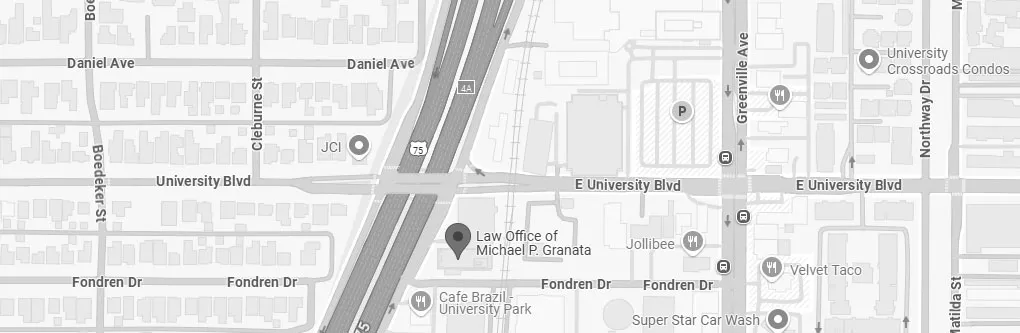
Law Office of Michael P. Granata
6440 N. Central Expressway, Suite 450
Dallas, Texas 75206
Phone: (214) 977-9050
Don’t let jurisdictional complexities or unclear expectations complicate your divorce. Schedule your consultation today and get the strategic, honest representation you deserve.