Nobody stands at the altar and promises to keep track of who pays for what. Most couples expect money to be the easy part. Then one career takes off, or one spouse steps back to raise the kids, or a layoff flips the numbers, and a new feeling moves into the house.
You may be the one carrying the mortgage and wondering if anyone has noticed. You may be the one who gave up a career and now has to explain a Target receipt. Either way, it is lonely, and it is hard to say out loud without sounding petty or ungrateful.
Thinking about divorce is painful enough without feeling ashamed of the reason. As a Dallas divorce attorney with more than 25 years in Dallas County family courts, I can tell you this problem is common, and it is rarely just about money.
This guide explains why income gaps breed resentment, what Texas law actually does with a paycheck, and the one practical step that helps whether you stay or go: a dated notes file.
Why Does an Income Gap Cause Resentment in a Marriage?
An income gap causes resentment when the difference in pay starts to decide whose time, opinions, and work count. The dollars are rarely the real complaint. The real complaint is about fairness, respect, and who gets a say.
What the Research Shows
The old pattern has changed. Pew Research Center reported that husbands were the primary or sole breadwinner in 55% of opposite-sex marriages in 2022, down from 85% in 1972. Spouses earned about the same in 29% of marriages, and wives were the primary or sole earner in 16%.
Work at home has not kept pace. Pew found that even when earnings were about equal, wives spent roughly 2.5 more hours a week on housework and 2 more on caregiving, while husbands had about 3.5 more hours of leisure.
Two widely cited studies help explain the tension:
- Identity. Economists Marianne Bertrand, Emir Kamenica, and Jessica Pan found that couples in which the wife earned more reported less satisfaction with the marriage and were more likely to divorce.
- Division of labor. Harvard sociologist Alexandra Killewald studied more than 6,300 couples and found that overall finances did not predict divorce, but how couples divided paid and unpaid work did. For couples married in 1975 or later, the risk was higher when the husband was not employed full-time.
These are group patterns, not predictions about your marriage. They do suggest the paycheck is often a stand-in for something else.
Two Sides of the Same Resentment
The higher earner often feels like an ATM: “I work constantly, I pay for everything, and nobody appreciates it.”
The lower earner often feels like a junior partner: “I have to ask permission. What I do at home doesn’t count. I gave up my career for this.”
A third version appears when the numbers flip. One spouse is promoted or the other is laid off, and nobody renegotiates who does what at home. Both spouses can be telling the truth at the same time.
If money is being used to control you, through cut-off accounts, demands for every receipt, or threats to leave you with nothing, that is more than resentment. If you fear for your safety, call 911. The National Domestic Violence Hotline is available 24/7 at 1-800-799-7233.
What Texas Law Actually Does With an Income Gap
The higher earner thinks, “It’s my money.” The lower earner thinks, “I’ll get half of everything, plus alimony.” Texas law supports neither statement.
“My Paycheck” Is Usually Community Property
Property either spouse acquires during marriage is generally community property under Texas Family Code Section 3.002, and property on hand at divorce is presumed community under Section 3.003. Each spouse has sole management of his or her own earnings under Section 3.102, which is why a paycheck in an individual account can feel private. Managing money is different from owning it alone.
Texas has no legal separation, so moving out does not stop this. Earnings generally remain community property until the divorce is granted.
Property Division Is “Just and Right,” Which May Mean Unequal
Courts divide the community estate in a “just and right” manner under Section 7.001. Under Murff v. Murff, a judge may consider a disparity in incomes or earning capacities, along with education, business opportunities, age, health, and separate property. An income gap can support a larger share for the lower earner. It does not guarantee one.
If one spouse wasted or hid community assets, Section 7.009 allows the court to account for what the estate should have held. In a high-net-worth divorce, bonuses, equity compensation, and business interests can make this picture far more complicated.
Spousal Maintenance Is Narrower Than Most People Think
An income gap alone does not create a right to spousal support. Under Section 8.051, the spouse seeking maintenance must lack enough property to meet minimum reasonable needs and must also fit a listed category. The one most couples ask about is a marriage of 10 years or longer where the spouse cannot earn enough to meet those needs. Other categories involve certain family violence offenses, disability, or caring for a child with a disability.
Three limits surprise people:
- Diligence. In the 10-year category, Section 8.053 presumes maintenance is not warranted unless the spouse has been diligent in earning income or developing skills during separation and while the case is pending.
- Amount. Section 8.055 caps payments at the lesser of $5,000 a month or 20% of the paying spouse’s average monthly gross income.
- Duration. Under Section 8.054, maintenance generally cannot exceed 5 years for marriages of 10 to 20 years, 7 years for 20 to 30 years, and 10 years for 30 years or more. Courts must generally order the shortest reasonable period.
Section 8.052 also tells courts to consider homemaker contributions and one spouse’s contribution to the other’s education, training, or increased earning power. This is where a career sacrifice can matter, if you can show it happened. A Dallas spousal support lawyer can tell you whether you may qualify.
Dallas Child Support Attorney Basics: Support Follows the Paying Parent’s Income
Guideline child support is a percentage of the paying parent’s net resources: 20% for one child and 25% for two, with higher percentages for more children. Since September 1, 2025, the guidelines apply up to $11,700 in monthly net resources, which makes the guideline maximum $2,340 for one child. A court may order more based on a child’s proven needs.
The higher earner is not automatically the payer. The paying parent is usually the one the child does not primarily live with. A spouse who cuts back income also takes a risk: under Section 154.066, a court may apply the guidelines to earning potential, and the Texas Supreme Court held in Iliff v. Iliff that proof of a purpose to avoid child support is not required. A Dallas child support attorney can run the numbers for your situation.
Child Custody Lawyer in Dallas: Why the Bigger Paycheck Doesn’t Decide Custody
Texas courts decide custody based on the child’s best interest under Section 153.002, and they may not favor a parent because of sex under Section 153.003. A child custody lawyer in Dallas will focus on caregiving history, stability, and each parent’s ability to support the child’s relationship with the other parent. Income is not the test.
Start a Dated Notes File: The Step Nobody Explains
Income resentment builds over years. By the time a lawyer asks when you left your job and why, anger may have rewritten the answer.
A dated notes file is a private, running record of facts written close to when they happen. We cover the basic setup on our family law blog. An income-gap case calls for a different kind of record, because resentment keeps score and a notes file keeps facts.
A scorecard says, “I’ve paid for everything for nine years.” A record shows who paid, what changed, when it changed, and what the two of you agreed. Only the second one helps a judge.
What to Track When Incomes Are Unequal
- Income changes. Raises, bonuses, stock awards, side income, job losses, and reduced hours, with dates.
- Career sacrifices. Who left a job, turned down a promotion, moved for the other’s career, or paid for a degree or license, and how you decided.
- Unpaid work. Who handles school, doctors, meals, and bedtime, and whether that changed.
- Money decisions. Who has access to which accounts, who decides, and any change in that access.
- Unusual transactions. Large withdrawals, new accounts, new cards, or spending you cannot explain.
- Important statements. Exact words about money, the marriage, or the children, in quotation marks.
- Your own conduct. Offers to talk, counseling, job searches, and training. These can matter if you later seek maintenance.
A Weak Entry vs. a Strong Entry
Weak: “She makes me beg for every dollar. She thinks she’s better than me since the promotion.”
Strong: “Oct. 14, 7:20 p.m., kitchen. Asked to use the joint card for Mia’s $185 school trip. T. said, ‘Send me the details and I’ll decide.’ Card declined the next morning at 8:05. Screenshot saved in my private folder.”
The file works for either spouse. A higher earner’s entry might read: “Sept. 9. $18,000 bonus deposited to joint savings. Texted J. at 4:12 p.m. Left work early and did 3:30 pickup and homework.”
For older events, label the entry honestly: “Written today from old emails. June 2019: we agreed I would leave my nursing job when we moved for his promotion.”
Keep It Clean and Keep It Legal
- Use a private account. Choose a device and login only you control.
- Never rewrite. Add a new dated entry if you need to correct something.
- Save only what you can lawfully access. Your pay stubs, joint statements, and joint tax returns are a good start. Logging into your spouse’s phone or email without permission can violate Texas Penal Code Section 33.02.
- Be careful with recordings. You may generally record a conversation you are part of, but not one you are not. Ask a lawyer first.
- Delete nothing. Destroying texts or financial records can seriously damage your case.
- Write for a judge. The other side may request your notes. Keep your feelings in a separate journal or take them to a counselor.
A notes file does not commit you to divorce. Sometimes it shows a workload problem that a frank conversation or marriage counseling can fix.
Contested Divorce in Dallas or Uncontested: What the Income Gap Changes
When to Call an Uncontested Divorce Attorney in Dallas
When one spouse has handled the money for years, that spouse may offer a fast, friendly deal. An uncontested divorce attorney in Dallas can check whether the numbers are complete and the terms are fair before you sign.
What a Contested Case Involves
If you cannot agree, your case may involve sworn inventories, discovery, temporary orders, and mediation. A court can order temporary support while the case is pending, under a different analysis from post-divorce maintenance.
How to Choose the Best Divorce Lawyer in Dallas for an Income-Gap Case
A search for “divorce attorney near me” returns plenty of names. The best divorce lawyer in Dallas for you is the one whose skills match your problem.
Dallas Family Law Attorney Qualifications to Look For
- Family law focus. Divorce and custody should be the core of the practice.
- Local experience. A family law attorney serving Dallas should know Dallas County courts and procedures.
- Financial fluency. Your lawyer should be comfortable with bonuses, equity pay, and business income.
- Trial readiness. Most cases settle, but your lawyer must be ready if yours does not.
- Honest assessment. Be wary of anyone who promises a result at the first meeting.
- Transparent pricing. You should understand the fees before you sign.
Reading Dallas Divorce Attorney Reviews
Look for patterns across many reviews. Comments about responsiveness, honesty, and clarity tell you more than any single post.
Frequently Asked Questions About Income Gaps and Divorce in Texas
Does the higher earner keep more in a Texas divorce?
Not because of the paycheck. Earnings during marriage are generally community property. If anything, a disparity in earning capacity may support a larger share for the lower earner.
Can I get alimony if my spouse makes more than I do?
Only if you meet Texas’s eligibility rules. A higher-earning spouse alone is not enough. You must lack sufficient property for your minimum reasonable needs and fit a category in Section 8.051.
Can my notes file be used against me?
It can be. Notes may be requested in discovery, so write only facts you would want a judge to read, and ask your attorney how to handle the file.
Is a father’s rights divorce in Dallas different when the wife earns more?
The legal standard is the same. Fathers’ rights in a Dallas divorce rest on the child’s best interest, and a father with lower income or a larger caregiving role can present that history like any other parent.
How do mothers’ rights in a Dallas divorce work if she is the breadwinner?
A mother who out-earns her husband is held to the same best-interest standard. Long work hours do not disqualify her, but she should be ready to show her actual involvement with the children.
How do I find an affordable divorce lawyer in Dallas if my spouse controls the money?
Ask about fees up front and bring organized records to reduce billable time. Texas courts may also order attorney’s fees in a divorce, including during the case, though no one can promise that result.
What should I bring to a Dallas divorce lawyer consultation?
Bring your notes file, recent pay stubs, two years of tax returns, account statements, mortgage or lease documents, and any court orders. Add a short list of questions and goals.
Serving Dallas and Surrounding Communities
Our Dallas divorce law firm proudly serves clients throughout Dallas County. We understand that divorce proceedings often involve local court systems, and our extensive experience in Dallas-area family courts gives our clients a distinct advantage.
Primary Service Areas:
- Dallas
- Garland
- Richardson
- Mesquite
- Irving
- DeSoto
- Grand Prairie
- Seagoville
- Duncanville
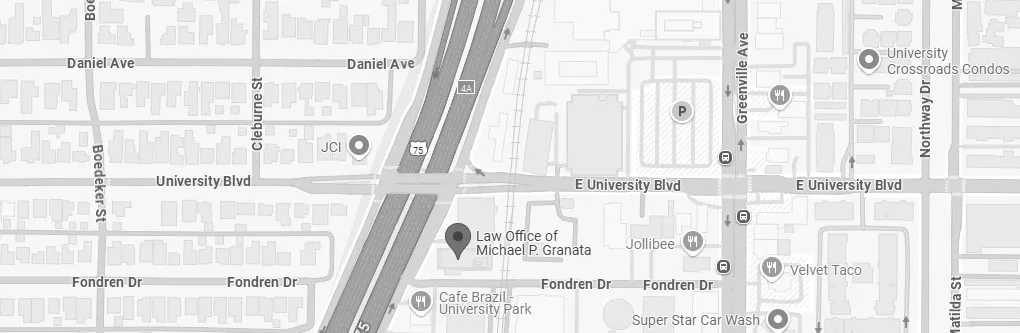
Whether you need a Dallas area divorce lawyer, a Richardson divorce lawyer, or a family attorney serving Garland, you can reach us at our office at 6440 N. Central Expressway, Suite 450, Dallas, Texas 75206, or at (214) 977-9050.
Key services: Divorce, Child Custody, Child Support, Asset Division, and Mediation.
Why You Should Call Us
- 25+ years’ experience
- Personalized attention from a small team
- Transparent pricing
- Clear and concise explanations of your legal options
- Honest case assessment, without placating, pandering, or false client appeasement
Our approach is compassionate, but we will be strategic, committed, and tough if court is necessary. You will get honest communication over empty reassurances, realistic assessments instead of inflated promises, and transparent guidance about likely outcomes. Our goal is informed decisions based on facts, not false hope.
Schedule Your Dallas Divorce Lawyer Consultation
If you recognize your marriage in these pages, you do not have to decide everything today. Start your dated notes file this week. Then get clear, honest advice about where you stand.
Call (214) 977-9050 or visit the Law Office of Michael P. Granata at 6440 N. Central Expressway, Suite 450, Dallas, Texas 75206 to schedule a confidential consultation with a Dallas divorce attorney who will give you facts, not false hope.
This article provides general information about Texas family law and is not legal advice. Reading it does not create an attorney-client relationship. Every case is different; consult a licensed Texas attorney about your specific situation. If you are in immediate danger, call 911.