Divorce asks a great deal of people. By the time a judge signs the final decree, most clients have spent months making difficult decisions about their home, retirement, children, and future. The last thing anyone wants to hear is that there is still paperwork left to do.
But there is —, and it may be the most consequential paperwork of the entire case.
Your divorce decree divides your property. It does not, by itself, rewrite the beneficiary forms sitting in the files of your life insurance carrier, your 401(k) administrator, your bank, and your brokerage. Those forms operate on their own legal track, and in many situations they will be honored exactly as written — even when everyone involved knows the marriage ended years earlier.
This is not a rare technicality. It is one of the most common and most expensive mistakes made after a Texas divorce, and it usually surfaces at the worst possible moment: after someone has died, when the money is already gone, and the family is left to litigate.
Here is what Texas law fixes automatically, what it conspicuously does not, where federal law overrides your decree entirely, and how to close the gap.
What a Beneficiary Designation Actually Is (and Why It Outranks Your Will)
A beneficiary designation is a contract-based instruction telling a financial institution who receives an asset when you die. It transfers the asset outside of probate, directly to the named person, and it generally controls over anything your will says.
That last point surprises people. You can sign a new will leaving everything to your children, and it will not move a dime of your 401(k) if your ex-spouse is still the named beneficiary on file with the plan.
Assets that pass this way include life insurance (individual and employer group), 401(k) and 403(b) plans, IRAs, pension survivor annuities, payable-on-death (POD) bank accounts, transfer-on-death (TOD) brokerage accounts, annuities, health savings accounts, 529 plan successor designations, and transfer-on-death deeds for real property.
Each is governed by the form on file. Not by your intentions, and not automatically by your decree.
What Texas Law Does — and Doesn’t — Do Automatically
Texas is more protective than many states. The Legislature anticipated this problem and wrote rules voiding certain ex-spouse designations after divorce. Those rules are real, and they help. They are also narrower than most people assume.
Texas Family Code § 9.301: Life Insurance
Under Texas Family Code § 9.301, if a divorce is granted after you named your spouse as the beneficiary of a life insurance policy, that designation is not effective — unless one of three exceptions applies:
- The divorce decree itself designates the former spouse as beneficiary.
- You redesignate the former spouse as beneficiary after the decree is rendered.
- The former spouse is designated to receive the proceeds in trust for, or on behalf of, a child or dependent.
If the designation fails, the proceeds go to the named alternate beneficiary. If there is no alternate, they go to the insured’s estate — which means probate, delay, and potential exposure to creditors.
Critically, § 9.301 also protects the insurance company. The carrier is only liable for paying the wrong person if it received written notice before payment that the designation was ineffective. Translation: if nobody tells the insurer, the insurer writes the check to your ex, and your family is left chasing the money afterward.
Texas Family Code § 9.302: Retirement Accounts and Financial Plans
Section 9.302 applies the same basic rule to retirement benefits and other financial plans — with the same three exceptions and the same written-notice requirement for the plan administrator.
But § 9.302 contains a limitation that catches many North Texas families off guard. Subsection (e) states the section does not apply to a beneficial interest in a public retirement system as defined by Section 802.001 of the Texas Government Code.
In Dallas County, that exclusion is not theoretical. It can reach the Teacher Retirement System of Texas, the Employees Retirement System, the Dallas Police and Fire Pension System, and the City of Dallas Employees’ Retirement Fund. If you or your spouse works for a school district, the city, or the state, the automatic revocation you were counting on may simply not apply. The form you signed years ago still stands.
Wills, Trusts, and Transfer on Death Deeds
Texas provides some automatic cleanup elsewhere. Under the Texas Estates Code, divorce generally revokes provisions in a will favoring a former spouse, reading the will as though the ex-spouse predeceased you. Estates Code § 123.052 similarly revokes revocable dispositions and fiduciary appointments favoring a former spouse in a trust instrument — while expressly pointing back to Family Code §§ 9.301 and 9.302 for insurance and retirement designations.
Transfer on death deeds are the trap. Under Estates Code § 114.057(c), a final divorce judgment revokes a transfer on death deed naming the former spouse only if notice of that judgment is recorded in the county deed records before the transferor’s death. Signing the decree is not enough. Somebody has to record it, or the deed stands, and the house passes to an ex-spouse.
Texas law also terminates an ex-spouse’s authority as agent under a durable power of attorney upon divorce, unless the document provides otherwise (Estates Code § 751.132) — helpful, but it leaves you with no agent at all, which is its own problem.
The Federal Preemption Trap: When ERISA Overrides Your Texas Decree
Here is the part that is rarely explained well, and it is the reason a well-drafted decree alone cannot protect you.
Most employer-sponsored benefits — the 401(k), the pension, the group life policy through work — are governed by the federal Employee Retirement Income Security Act (ERISA). And federal law preempts conflicting state law.
In Egelhoff v. Egelhoff, 532 U.S. 141 (2001), the U.S. Supreme Court struck down a state statute that automatically revoked beneficiary designations upon divorce, holding it was preempted as applied to ERISA plans. The Texas Supreme Court reached a parallel conclusion in Barnett v. Barnett, 67 S.W.3d 107 (Tex. 2001), holding ERISA preempted state-law community property claims against employer-plan life insurance proceeds.
The practical consequence: Texas Family Code §§ 9.301 and 9.302 generally do not save you on an ERISA-governed plan. The very statutes most people rely on are switched off for the accounts most people have.
Then came Kennedy v. Plan Administrator for DuPont Savings & Investment Plan, 555 U.S. 285 (2009). A husband named his wife as beneficiary of his savings plan. They divorced, and the decree divested her of any interest. He never submitted a new form. He died. The plan paid the ex-wife — and the Supreme Court agreed that was correct.
ERISA requires administrators to pay “in accordance with the documents and instruments governing the plan.” Administrators are not required, and largely not permitted, to go hunting through divorce decrees to determine who should really get the money. The Court left open whether the estate could later sue the ex-spouse to enforce the waiver — but that is a second lawsuit, years later, with no guarantee of success.
Federal employees face an even harder rule. In Hillman v. Maretta, 569 U.S. 483 (2013), the Court held the Federal Employees’ Group Life Insurance Act preempted both a state statute redirecting proceeds from a named ex-spouse and the state-law cause of action seeking to recover them afterward. Similar logic has long applied to servicemembers’ coverage under Ridgway v. Ridgway, 454 U.S. 46 (1981).
The Texas Supreme Court’s decision in Keen v. Weaver, 121 S.W.3d 721 (Tex. 2003), leaves room to enforce a clear federal-common-law waiver in some circumstances. But relying on that is litigation strategy, not planning. The reliable fix is far simpler: file a new beneficiary form with the plan itself.
Nine Designations Most Often Missed After a Dallas Divorce
These are the accounts overlooked most frequently:
- Employer group life insurance — often free or low-cost, so people forget it exists.
- The 401(k) or 403(b) — divided by a QDRO, but the death beneficiary form is a separate document entirely.
- IRAs and rollover accounts — the custodian agreement controls, and a rollover often carries the old designation forward.
- Pension survivor annuity elections — frequently irrevocable once benefits commence.
- POD and TOD accounts at banks and brokerages, opened during the marriage and never revisited.
- Annuities and health savings accounts.
- 529 plan successor owner designations — which control who takes over the account, not just who benefits.
- Military Survivor Benefit Plan coverage — a former-spouse election generally must be filed with DFAS within one year of the decree, and the former spouse can protect themselves with a deemed election under 10 U.S.C. § 1450(f)(3).
- Federal FEGLI and Thrift Savings Plan designations — governed by the form on file with the agency and, as Hillman shows, largely immune from state-law correction.
One more, for anyone who has remarried: under ERISA, your current spouse is generally the automatic beneficiary of a qualified retirement plan. If you intend to leave that account to children from a prior marriage, you will typically need your new spouse’s notarized written consent. Naming the children on the form alone will not do it.
What You Can Change While the Divorce Is Still Pending
A word of caution before anyone starts filing forms mid-case.
Dallas County, like most Texas counties, applies a standing order the moment a divorce petition is filed. Those orders routinely prohibit changing or canceling beneficiary designations, withdrawing from or altering retirement accounts, and changing account designations while the case is pending. The purpose is to preserve the estate until the court divides it.
Violating a standing order can mean contempt, sanctions, or a significantly worse posture in negotiations. The right sequence is to identify every designation early, address them explicitly in the decree, and execute the changes immediately after it is signed. Our blog covers Dallas County standing orders in more detail.
Your Post-Decree Beneficiary Checklist
Work through this in the first thirty days after your decree is signed:
- Inventory every account — insurance, retirement, bank, brokerage, HSA, annuity, and education, including anything from a former employer.
- Ask each institution what beneficiary form it actually has on file. Do not assume.
- Submit new designation forms directly to each institution, naming primary and contingent beneficiaries.
- Get written confirmation that each change was processed, and keep it with your decree.
- Confirm QDRO entry and plan approval for any divided retirement account — separately from the death beneficiary form.
- Record notice of the divorce judgment in the deed records of any county where a transfer on death deed is on file.
- Re-execute your will, powers of attorney, medical directives, and any revocable trust.
- Handle federal and military benefits on their own forms and deadlines — FEGLI, TSP, and SBP each have specific paperwork.
- Calendar an annual review. Designations drift as jobs, accounts, and families change.
When It’s Already Too Late
Sometimes a family discovers the problem only after a death. The outcome then depends heavily on the type of asset.
For a non-ERISA asset governed by Texas law, §§ 9.301 and 9.302 may void the designation — and written notice to the carrier before it pays is often the difference between a clean result and a lawsuit. Where money has already been distributed, Texas courts have imposed constructive trusts in appropriate cases to recover proceeds from a former spouse who had waived them. For ERISA plans, Kennedy generally means the administrator’s payment stands, with any remedy pursued against the recipient afterward. For FEGLI and similar federal programs, Hillman suggests even that remedy may be foreclosed.
These cases are fact-intensive and time-sensitive — and far more expensive than the twenty minutes it would have taken to submit a new form. If you are facing one, speak with a family law attorney serving Dallas promptly, because deadlines and notice requirements matter enormously here.
Choosing the Right Dallas Divorce Lawyer to Get This Right
The quality of your decree determines how much cleanup you face later. A thorough Dallas divorce attorney does not simply divide assets — they identify every beneficiary-driven asset in the marital estate, build specific obligations into the decree, and hand you a closing checklist so nothing is left undone.
Dallas Family Law Attorney Qualifications Worth Looking For
When evaluating a Dallas divorce lawyer, weigh these criteria:
- Depth of experience in Dallas-area family courts, including local standing orders and practice.
- Command of the retirement and benefits side of divorce — QDROs, ERISA preemption, pension survivor elections, and federal and military benefits.
- Willingness to give honest assessments, including the answer you did not want.
- Transparent, predictable fees with clearly defined scope.
- Direct attorney access, rather than handoffs to rotating staff.
- Consistent client feedback — Dallas divorce attorney reviews tell you how a firm communicates under pressure.
If you are searching for a divorce attorney near me or trying to identify the best divorce lawyer in Dallas, weigh substance over marketing. The firm that tells you your case has a weakness is usually the firm that will handle it well.
Whether yours is an uncontested divorce attorney in Dallas matter resolved in mediation or a contested divorce in Dallas headed for trial, the beneficiary issue is identical — and equally easy to miss.
Frequently Asked Questions
Does my divorce decree automatically remove my ex-spouse as beneficiary in Texas?
Not reliably. Texas Family Code §§ 9.301 and 9.302 void many ex-spouse designations for life insurance and retirement plans, but the statutes carve out public retirement systems and are preempted by federal ERISA law for most employer-sponsored plans. The only dependable fix is filing a new beneficiary form with each institution after the decree is signed.
How long do I have to change beneficiaries after a Texas divorce?
There is no single statutory deadline for most private accounts, but the practical answer is immediately. Some benefits do have hard deadlines — a military Survivor Benefit Plan former-spouse election generally must be filed within one year of the decree.
Can I change my beneficiaries while my Dallas divorce is pending?
Generally no. Dallas County standing orders typically prohibit changing beneficiary designations while a case is pending. Address the issue in the decree and make the changes immediately after it is signed.
What happens if my ex-spouse is still listed on my 401(k) when I die?
If the plan is ERISA-governed, the administrator will likely pay your ex-spouse under the plan documents rule from Kennedy v. DuPont. Your estate may be able to sue afterward to enforce a decree waiver, but that is a separate, uncertain, and costly proceeding.
Does this affect child support and custody orders?
Those are separate obligations, but they intersect: life insurance is frequently used to secure support, so designations should align with the decree. A Dallas child support attorney or child custody lawyer in Dallas can confirm your obligations are properly secured.
Is this different for fathers and mothers?
No — the statutes are neutral. The issue arises in fathers’ rights divorce Dallas and mothers’ rights divorce Dallas cases alike, and matters most where minor children are the intended beneficiaries, which usually calls for a trust or custodial arrangement rather than naming a child directly.
What if we have significant assets or business interests?
Complexity multiplies the risk. Deferred compensation, restricted stock, closely held business interests, and multiple retirement vehicles each carry their own designation rules. A Dallas high-net-worth divorce lawyer should map every one of them during the case, not after.
Do beneficiary designations affect spousal support?
They can. Court-ordered maintenance is sometimes secured by life insurance, and the obligation may survive in ways people do not expect. A Dallas spousal support lawyer can review whether your decree requires you to maintain coverage, and for how long.
How much does it cost to fix this?
Updating forms after a decree is usually inexpensive and often something you can do yourself with a checklist. Litigating a wrongly paid death benefit is not. If cost is a concern, an affordable divorce lawyer in Dallas who addresses this during the case saves far more than the fee.
Serving Dallas and Surrounding Communities
Our Dallas divorce law firm proudly serves clients throughout Dallas County. We understand that divorce proceedings often involve local court systems, and our extensive experience in Dallas-area family courts gives our clients a distinct advantage.
Primary Service Areas: Dallas, Garland, Richardson, Mesquite, Irving, DeSoto, Grand Prairie, Seagoville, and Duncanville.
As a Dallas area divorce lawyer and family attorney serving Garland, Richardson, Mesquite, Irving, and surrounding communities, we handle divorce, child custody, child support, asset division, and mediation.
Why clients call us:
- 25+ years of experience in Texas family law
- Personalized, small-team attention — you work with your attorney, not a rotating cast
- Transparent pricing and clear scope from the outset
- Clear, concise explanations of your legal options in plain language
- Honest case assessment, without placating, pandering, or false appeasement
Our approach is compassionate — and strategic, committed, and tough when court is necessary. We believe honest communication serves you better than empty reassurance, and that realistic assessments beat inflated promises that cannot be delivered. We care about your interests enough to be transparent about likely outcomes. The goal is informed decisions based on facts, not false hope.
Schedule Your Dallas Divorce Lawyer Consultation
If your divorce is pending, beneficiary designations belong in your decree — not on a to-do list you will forget. If your divorce is already final, take an hour this week and confirm what each institution actually has on file. It may be the highest-value hour of your year.
Our Dallas divorce lawyer team is ready to help you build a decree that holds up and a closing checklist that leaves nothing unfinished.
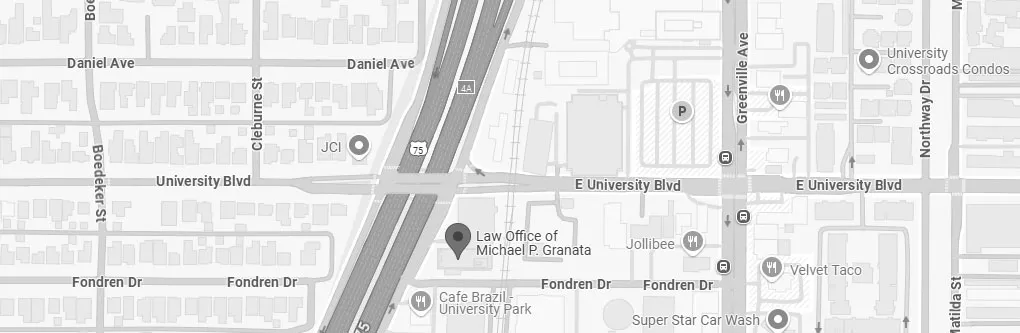
Law Office of Michael P. Granata, 6440 N. Central Expressway, Suite 450, Dallas, Texas 75206. Phone: (214) 977-9050
Call today to schedule your Dallas divorce lawyer consultation with an experienced Dallas divorce attorney who will give you a straight answer about where you stand.
Disclaimer: This article is provided for general informational purposes only and does not constitute legal advice, nor does it create an attorney-client relationship. Statutes, regulations, and case law change, and outcomes depend on the specific facts of each matter. You should consult a licensed Texas attorney regarding your particular circumstances before acting on any information contained here.