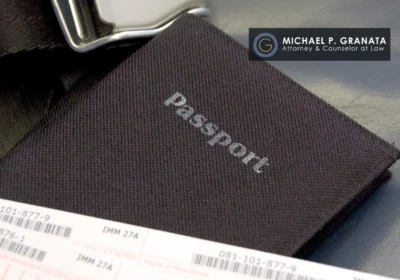
If you are reading this, there is a good chance your family is going through one of the most difficult seasons it will ever face. Divorce reshapes everything, and when children are involved, ordinary questions suddenly feel enormous. Something as simple as a family beach trip or a visit to see relatives overseas can turn into a source of anxiety, conflict, and even fear. You are not overreacting. These worries are real, and they deserve straight answers.
Few topics in Texas family law are as widely misunderstood as passports, international travel consent, and who controls a child’s passport after a divorce. Parents search for guidance and find vague articles that never actually explain the rules. This guide fixes that. As an experienced Dallas divorce attorney, our goal is to give you clear, accurate information so you can protect your children and make informed decisions, whether you are planning a trip or worried the other parent might not bring your child home.
Below, we walk through how Texas custody orders handle passports, what federal law requires, how travel consent letters work, and the practical language you should ask for in your order. If you are just beginning to explore your options, our team offers guidance at every step, and you can learn more about the full divorce process in Dallas on our main practice page.
Why the Child’s Passport Becomes a Flashpoint in Dallas Custody Cases
A passport is more than a travel document. In a contested case, it can feel like a symbol of control, and in the worst cases, it is the key that could allow one parent to remove a child from the country. Texas courts take this seriously, and so should you.
Most passport disputes fall into one of three categories. First, cooperative co-parents who simply need to know the correct procedure to get a passport and travel legally. Second, parents in a contested divorce in Dallas where distrust is high and every travel request becomes a negotiation. Third, and most serious, situations involving a credible risk of international parental child abduction, where one parent fears the other may flee with the child to a country that will not send them back.
The right approach depends on which category you are in. A skilled child custody lawyer in Dallas can help you build an order that fits your family’s reality, rather than a one-size-fits-all template that leaves dangerous gaps.
How Texas Law Handles the Child’s Passport (Conservatorship Basics)
Texas does not use the words “custody” and “visitation” in its statutes. Instead, Texas law speaks in terms of conservatorship, which is the bundle of rights and duties each parent holds. Understanding this language is the first step to understanding passports.
In most cases, Texas courts name both parents Joint Managing Conservators, meaning they share the rights and duties of raising the child. In some cases, one parent is named Sole Managing Conservator, which concentrates more decision-making authority in a single parent. Neither label automatically decides who controls the passport, and that is exactly why the specific wording of your order matters so much.
Who Holds the Exclusive Right to Apply for a Child’s Passport?
A Texas custody order can allocate specific rights to one parent, to both parents jointly, or to each parent independently. One of the rights that can be allocated is the exclusive right to apply for, renew, and maintain the child’s passport.
When a court grants one parent the exclusive right to apply for a passport, that parent has the legal authority to move the application forward without a signature from the other parent, subject to the federal rules discussed below. When the right is held jointly, both parents must agree. Because this single provision can determine whether a passport ever gets issued, it should never be left to chance or boilerplate.
Abduction-Prevention Tools Under Texas Family Code Sections 153.501-153.503
Texas has built specific safeguards into the Family Code for families where international travel raises real concerns. If a judge finds a credible risk that a parent may take a child abroad and not return, the court has broad authority to impose protective conditions.
Under these provisions, a Texas court can order measures such as:
- Requiring that the child’s passport be surrendered to the court, a third party, or the other parent.
- Prohibiting a parent from applying for a new or replacement passport or travel visa on the child’s behalf.
- Barring travel to specific countries, particularly those that are not part of the Hague Convention on international child abduction.
- Requiring a bond or other financial security before any international travel is permitted.
- Appointing a third party to supervise the child’s travel, or requiring a detailed itinerary and return-ticket proof.
These are powerful tools, but a judge will only impose them where the evidence supports a genuine risk. Presenting that evidence persuasively is where the guidance of a seasoned family law attorney serving Dallas makes a decisive difference.
Federal Passport Rules Every Dallas Parent Should Understand
Here is the point that trips up so many parents: your Texas custody order and federal passport law are two separate systems that must line up. Even if your order gives you the exclusive right to apply for the passport, the U.S. Department of State applies its own rules at the counter.
The Two-Parent Consent Rule for Children Under 16
For any child under the age of 16, federal law requires the consent of both parents to issue a U.S. passport. In practice, this usually means both parents appear in person with the child at an acceptance facility. This rule exists precisely to reduce the risk of one parent obtaining a passport and traveling without the other’s knowledge. Passports for children under 16 are valid for five years and cannot be renewed by mail.
Form DS-3053: When One Parent Cannot Appear in Person
If both parents cannot appear together, the absent parent can complete Form DS-3053, the Statement of Consent. This form must be signed in front of a notary public and submitted with a photocopy of the absent parent’s photo ID. Timing matters: the DS-3053 must be submitted within 90 days of being notarized, so it cannot be signed far in advance and held indefinitely.
What If You Are the Sole Managing Conservator?
If you have been granted sole legal authority over the child, or the exclusive right to apply for a passport, you may be able to apply without the other parent by presenting the appropriate court documents in place of the second parent’s consent. The State Department wants to see clear documentation, such as a certified copy of the order granting you that authority. This is one of many reasons your final order should be worded with passport applications specifically in mind, a detail our Dallas child custody lawyers address directly when drafting.
Travel Consent Letters: Your Best Friend at the Airport
Even after a passport is issued, having the document does not automatically mean smooth travel. Airlines, border agents, and foreign immigration officials frequently ask a parent traveling alone with a child to prove the other parent consents to the trip. Without documentation, a family vacation can end at a security checkpoint.
A well-prepared child travel consent letter typically includes:
- The traveling child’s full name, date of birth, and passport number.
- The names of both parents and the name of the parent or adult accompanying the child.
- The destination, the travel dates, and the return date.
- A clear statement that the non-traveling parent consents to the trip, with contact information.
- A notary’s signature and seal, which many countries expect for international trips.
Many Texas custody orders now include a standing requirement that each parent provide advance written notice of international travel, along with a signed consent letter and a full itinerary. Building these expectations into your order removes ambiguity and reduces last-minute conflict. If you want to understand how travel provisions interact with the rest of your parenting plan, our blog covers related Dallas family law topics in plain language.
The Children’s Passport Issuance Alert Program (CPIAP)
One of the most important tools available to worried parents is completely free, and most people have never heard of it. The Children’s Passport Issuance Alert Program, or CPIAP, lets the U.S. Department of State notify an enrolled parent whenever someone applies for a passport for their child.
To enroll, a parent submits Form DS-3077 for each child, along with proof of identity and proof of the legal relationship to the child. Any U.S. citizen under 18 can be enrolled. Once a child is in the system, if a passport application is submitted, the State Department can contact the enrolling parent to confirm that the two-parent consent requirement has been met.
It is important to understand the limits. CPIAP is an alert system, not an absolute block. Enrollment does not guarantee that a passport will never be issued, and the enrolling parent can still consent after being notified. Still, for families where trust has broken down, that advance warning can be the difference between prevention and a crisis. A Dallas divorce attorney who handles high-conflict cases will often recommend CPIAP enrollment alongside protective language in the order itself.
What to Put in Your Custody Order About Passports and Travel
If you take away one lesson from this guide, let it be this: vague orders create future fights. The best protection is precise, forward-looking language written before a dispute arises. When our attorneys draft or review a parenting plan, we look at the following key criteria:
- Who holds the passport right. State clearly whether the right to apply for, renew, and maintain the passport is joint, exclusive to one parent, or independent.
- Physical custody of the document. Specify which parent physically holds the passport between trips and how it is exchanged for travel.
- International travel notice. Require written notice a set number of days before any international trip, including destination and itinerary.
- Consent letters. Require each parent to sign a notarized travel consent letter when the other parent travels internationally with the child.
- Country restrictions. Where risk exists, limit travel to Hague Convention countries or prohibit travel to specific nations.
- Safeguards for high-risk cases. Consider passport surrender, bonds, supervised travel, and CPIAP enrollment where the evidence justifies them.
- Dispute resolution. Set a process, such as mediation, for resolving travel disagreements without an emergency court filing.
These provisions protect both parents. The traveling parent gains certainty that lawful trips will not be blocked, and the other parent gains transparency and peace of mind. Whether you are pursuing an uncontested divorce in Dallas or bracing for a hard-fought custody battle, getting this language right the first time saves enormous stress later.
Fathers’ Rights and Mothers’ Rights: Equal Footing on Passports
Texas law does not favor mothers or fathers when it comes to conservatorship rights, and that includes decisions about passports and travel. Both parents are presumed to play a meaningful role in the child’s life unless there is a compelling reason otherwise.
In our experience, fathers sometimes worry they will be sidelined from major decisions, while mothers sometimes fear their concerns about travel will be dismissed. Both fears are understandable, and both are best addressed with a clear, specific order rather than assumptions. Strong advocacy for fathers’ rights in a Dallas divorce and equally strong advocacy for mothers’ rights in a Dallas divorce share the same foundation: precise legal drafting and honest preparation. If your case also involves significant assets, our high-net-worth divorce team and spousal support attorneys can coordinate on the financial pieces at the same time.
Frequently Asked Questions About Passports and Texas Custody Orders
Can one parent get a child’s passport without the other parent’s consent in Texas?
Usually no. For a child under 16, federal law requires both parents to consent. The exception is when a parent has been granted sole authority or the exclusive right to apply for the passport by court order, in which case that parent can apply by presenting the proper documentation. Working with a child custody lawyer in Dallas ensures your order supports the application you need to make.
What is the two-parent consent rule for a child’s passport?
For children under 16, the U.S. Department of State requires consent from both parents, typically by both appearing in person, or by the absent parent submitting a notarized Form DS-3053. The rule is designed to help prevent international parental child abduction.
Can a Texas judge take away a child’s passport?
Yes. Under Texas Family Code Sections 153.501 through 153.503, a court can order a child’s passport surrendered and can prohibit a parent from applying for a new one when there is a credible risk of international abduction. A contested divorce in Dallas involving these concerns should be handled by an attorney experienced in abduction-prevention orders.
Do I need a travel consent letter to fly abroad with my child?
It is strongly recommended. Airlines and foreign border officials often ask a parent traveling alone with a child to prove the other parent consents. A notarized travel consent letter with the itinerary and both parents’ information prevents delays and denied boarding.
How much does a Dallas divorce lawyer consultation cost?
Costs vary by firm. Our office believes in transparent pricing and an honest case assessment from the start, so you know what to expect before you commit. During a Dallas divorce lawyer consultation, we discuss your goals, explain your legal options clearly, and give you a realistic view of likely outcomes rather than empty reassurances.
What qualifications should I look for in a Dallas family law attorney?
Look for depth of experience in Texas family courts, familiarity with your county’s local procedures, transparent billing, and a track record you can verify. Reading Dallas divorce attorney reviews from past clients is a good way to confirm a firm’s reputation. Strong Dallas family law attorney qualifications also include clear communication and a willingness to tell you the truth, even when it is not what you hoped to hear.
Who handles child support if we disagree about travel costs?
Travel and support are separate issues, but they often overlap. A Dallas child support attorney can help clarify how travel expenses fit within your existing support obligations. You can read more on our child support practice page.
Serving Dallas and Surrounding Communities
Our Dallas divorce law firm proudly serves clients throughout Dallas County. We understand that divorce proceedings often involve local court systems, and our extensive experience in Dallas-area family courts gives our clients a distinct advantage. As a trusted Dallas area divorce lawyer, we know the judges, the procedures, and the local expectations that can shape the outcome of your case.
Primary Service Areas
We represent parents and spouses across the region, including as a family attorney serving Garland, a divorce lawyer in Irving, Richardson, Mesquite, and Grand Prairie. Our primary service areas are:
- Dallas
- Garland
- Richardson
- Mesquite
- Irving
- DeSoto
- Grand Prairie
- Seagoville
- Duncanville
Key Services
We focus our practice on the areas that matter most to families in transition: Divorce, Child Custody, Child Support, Asset Division, and Mediation. Whether your matter is an affordable, uncontested divorce in Dallas or a complex, high-stakes dispute, we tailor our approach to your goals and your budget.
Why You Should Call Us
Choosing the right advocate is one of the most important decisions you will make. Here is what sets our firm apart:
- More than 25 years of experience in Texas family law and Dallas-area courts.
- Personalized, small-team attention so you are never just a case number.
- Transparent pricing with no surprise bills.
- Clear, concise explanations of your legal options at every stage.
- Honest case assessments without placating, pandering, or false appeasement.
We take a compassionate approach, but we will be strategic, committed, and tough when court becomes necessary. We believe in honest communication over empty reassurances, realistic assessments rather than inflated promises we cannot keep, and genuine care for your interests backed by transparent guidance about likely outcomes. Our goal is to help you make informed decisions based on facts, not false hope. That philosophy is why so many clients describe us in their Dallas divorce attorney reviews as both approachable and formidable.
Schedule Your Confidential Consultation Today
If passports, travel consent, or any part of your custody order is keeping you up at night, you do not have to face it alone. As an experienced Dallas divorce attorney and the team many families consider the best divorce lawyer in Dallas for high-conflict and travel-related matters, we are ready to help you protect what matters most. If you have been searching for a trusted divorce attorney near me, your search can end here.
Call us today to schedule your confidential consultation and get honest answers about your options.
Address: 6440 N. Central Expressway, Suite 450, Dallas, Texas 75206
Phone: (214) 977-9050
Learn more: Dallas Divorce Lawyer | Dallas Child Custody Lawyer | Dallas Child Support Lawyer